
How Big a Queen Bed: Dimensions and Space Guide for 2026
Understand how big a queen bed dimensions really are, comparing frame footprints, room clearances, and essential bedding sizes for October 2026.
 By Zoe Sessums
Updated October 13, 2026
By Zoe Sessums
Updated October 13, 2026

Measuring floor space before bringing home a new sleeping setup prevents cramped walkways and mismatched furniture. While standard mattress charts list uniform surface measurements, figuring out how big a queen bed actually is involves looking past the fabric edges to exterior frame boundaries, headboard depths, and surrounding walking lanes. Many sleepers purchase a mattress thinking it will leave plenty of breathing room, only to realize that an ornate wooden headboard, wide side rails, or pull-out storage drawers demand significantly more square footage than anticipated. Accounting for these structural realities early keeps doorways accessible, allows nightstands to sit flush, and ensures your bedroom feels balanced rather than overcrowded.
Evaluating foundation mechanics and mattress support is equally critical when mapping out your room footprint. A standard sleep surface needs proper structural support, including center support rails, reinforced support legs, and tightly spaced slats to preserve mattress longevity and prevent sagging. Whether you plan to install a minimalist metal platform, an upholstered headboard, or a multi-drawer storage bed, matching exterior dimensions to your bedroom layout ensures smooth daily movement. By understanding exact sleeping dimensions, peripheral clearance zones, and bedding specifications, you can build a restful sleeping environment that supports both your body and your living space.
| Award | Product | FCH Score About FCH ScoreThe FCH Score is our own rating from 0 to 10, based on performance, design and build, ease of use, and value. It reflects independent research and is never influenced by manufacturers, retailers, or affiliate commissions. Learn more › | |
|---|---|---|---|
| Best Overall |
White Bed Skirt Queen Size 15 Inch Drop
|
9.2/10 | Buy |
| Best Budget |
 Queen Comforter Set - 7PCS Bed in a Bag
|
8.9/10 | Buy |
| Best Premium |
 Meliusly Heavy Duty Bunkie Board Queen Size
|
8.8/10 | Buy |
| Best Value |
 EMODA Queen Bed Frame 18 Inch Heavy Duty Tall
|
8.6/10 | Buy |
 Welzona Queen Upholstered Bed Frame
|
8.3/10 | Buy | |
 DICTAC Queen Bed Frame with Storage Headboard & 5
|
8.3/10 | Buy | |
 QUTOOL Cooling Pillow for Sleeping
|
8.1/10 | Buy | |
 TIGUBFRE Queen Bed Frame with Storage Headboard
|
8.0/10 | Buy |
Navigating Queen Bed Dimensions, Frame Footprints, and Room Layouts
A standard US queen mattress measures 60 inches wide by 80 inches long, providing 4,800 square inches of sleep surface. This footprint offers a versatile balance for solo sleepers seeking extra space and couples sharing a bed in residential rooms. However, determining how a queen bed fits into your bedroom requires looking beyond the mattress perimeter. Outer frame rails, decorative headboards, pull-out storage drawers, and walkway clearances all alter the true footprint of your bed. Understanding how these structural components interact helps you plan traffic lanes, select proper bedding, and ensure your frame provides dependable support.
Standard Queen Mattress Dimensions and Surface Area
In the standard American mattress sizing hierarchy, a queen mattress sits directly between a full size and an eastern king. A standard full mattress measures 54 inches wide by 75 inches long, meaning a queen adds six inches of width and five extra inches of length. Those additional five inches of length are crucial for taller individuals, ensuring sleepers over six feet tall can rest without their feet hanging off the edge. At the same time, a queen is 16 inches narrower than a standard king bed, which measures 76 inches wide by 80 inches long.
When shared by two adults, a queen mattress provides each person with 30 inches of individual width. While narrower than a twin mattress providing 38 inches of single width, it fits comfortably into bedrooms where a king bed would overwhelm the layout. Solo sleepers who upgrade to a queen gain substantial room to stretch out without rolling near the perimeter. This spatial balance makes the queen format the most popular mattress size across apartments, guest rooms, and master bedrooms.
Mattress Size versus Outer Bed Frame Footprint
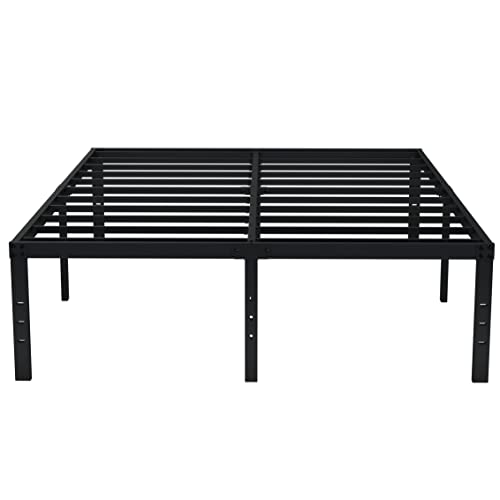
The outer dimensions of a bed frame almost always exceed the 60-by-80-inch perimeter of the mattress resting on top of it. Basic metal platform frames maintain a tight boundary that closely mirrors the mattress dimensions. Frames like the EMODA 18-inch tall platform feature legs and side rails that align flush with the mattress edges. This slim outer profile makes minimalist metal platforms ideal for compact rooms where every inch of walkway clearance matters.
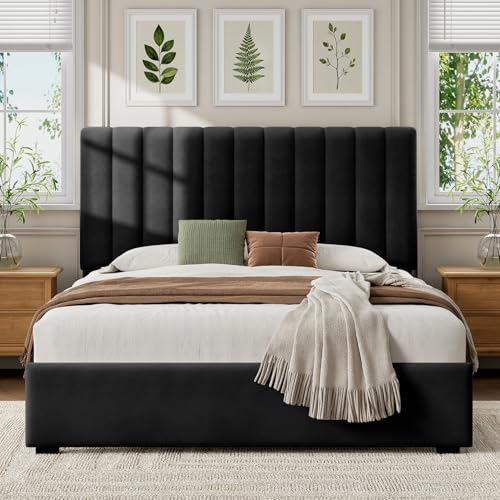
Upholstered frames and decorative wooden platforms expand the outer footprint noticeably. Padded side rails and thick footboards frequently add two to four inches to both the overall width and length of the bed. For example, an upholstered platform bed with vertical channel tufting, such as the Welzona velvet frame, includes an adjustable headboard measuring 42 to 46 inches in height. The fabric padding and headboard posts extend the total bed length beyond the baseline 80 inches of the mattress.
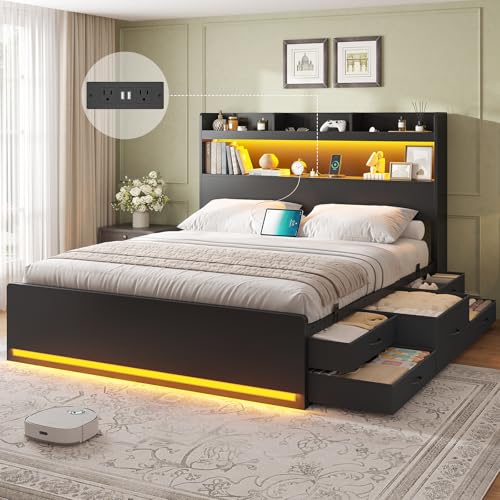
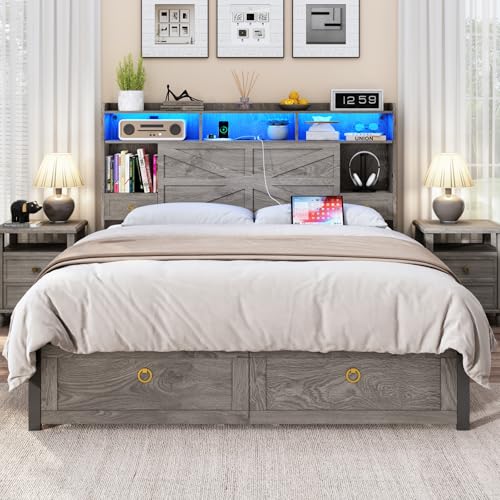
Storage headboards and integrated furniture suites require the largest spatial allowances. Bookcase headboards featuring charging stations, display shelves, and concealed compartments can easily add 6 to 10 inches of depth behind the pillows. Models such as the DICTAC queen frame with an integrated bookcase headboard or the TIGUBFRE farmhouse bed frame demand extra floor depth to accommodate built-in shelving. Failing to account for this extended headboard depth can prevent adjacent doors or closet entries from opening freely.
Recommended Bedroom Sizes and Walkway Clearances
Spatial planners generally recommend a minimum bedroom size of 10 feet by 10 feet to house a queen bed comfortably. In a 10-foot by 10-foot room, a queen bed consumes nearly half the usable length and width, leaving narrow margins for other furniture. While a queen bed physically fits inside a 100-square-foot room, it leaves limited space for matching dressers or nightstands. If your bedroom is 10 feet by 10 feet, choosing a low-profile platform bed without bulky side rails keeps the space manageable.
A bedroom measuring 10 feet by 12 feet or 12 feet by 12 feet provides a far more functional environment for a queen sleep system. These dimensions allow for the recommended 30 to 36 inches of clear walking space around the perimeter of the mattress. Maintaining at least 30 inches of open clearance allows two people to move comfortably on either side of the bed without turning sideways. It also ensures adequate clearance for making the bed and tucking in sheets without feeling restricted.
Door swings and architectural features must also be mapped before finalizing your bed placement. Entry doors, en-suite bathroom doors, and closet bi-fold panels require completely unobstructed pathways to open fully. Placing a 60-by-80-inch frame too close to a doorway creates traffic bottlenecks and risks scuffing wood finishes. You should also verify that the headboard does not block lower window sills, electrical wall outlets, or heating vents.
Vertical Profile, Sitting Ergonomics, and Foundation Height
A bed’s vertical profile impacts both the visual scale of your room and daily physical ergonomics. Total bed height consists of three separate components: the bed frame deck height, the mattress thickness, and any auxiliary support layers. Modern platform beds often sit between 12 and 18 inches off the carpet, eliminating the traditional need for a bulky box spring. When paired with an average 10-to-12-inch mattress, an 18-inch tall frame like the EMODA metal platform creates an assembled sleep surface roughly 28 to 30 inches high.
Ergonomically, the ideal bed height allows you to sit on the edge with your feet resting flat on the floor and your knees bent at a 90-degree angle. Beds that sit too low can strain knees and lower back joints when standing up, particularly for taller adults. Conversely, pairing a thick 14-inch pillow-top hybrid mattress with a tall foundation can make getting into bed awkward. If your platform frame provides a tall deck, choosing a medium-profile mattress preserves natural sitting posture.
Low-profile support accessories help fine-tune vertical clearance without distorting the bed profile. Traditional wooden bunkie boards add 1.5 to 3 inches of unwanted elevation, which can cause fitted sheets to slip and alter headboard sightlines. In contrast, ultra-low foundations such as the Meliusly heavy duty bunkie board measure just 0.4 inches thick while bridging slat gaps. This slim profile preserves the designed height of the mattress while delivering rigid support across the entire 60-by-80-inch surface.
Bedding, Linens, and Accessory Proportions for Queen Beds
Selecting appropriately sized bedding prevents awkward fabric bunching and ensures adequate nighttime coverage. Standard queen fitted sheets are cut specifically to match the 60-by-80-inch mattress perimeter, but pocket depth varies considerably across sheet sets. Modern deep-pocket fitted sheets, such as those found in the HYMOKEGE 7-piece seersucker bed in a bag set, feature a 14-inch pocket designed to wrap securely around 12-to-15-inch mattresses. A proper pocket depth keeps the elastic corners firmly anchored during active sleep movements.
Top sheets and comforters require substantial overhang along the sides and foot of the bed to drape gracefully. A typical queen flat sheet measures approximately 90 inches wide by 102 inches long, allowing 15 inches of fabric drop on either side. Queen comforters generally measure 88 by 88 inches, providing ample coverage to conceal the mattress core and upper foundation rails. This generous drape prevents nighttime tug-of-war between sleeping partners while maintaining a tailored appearance.
Under-bed skirts and pillow configurations also correspond directly to queen dimensions. A queen bed skirt, such as the RIMELA elastic wrap-around ruffled skirt, is sized for an 80-inch length and 60-inch width with a 15-inch vertical drop. This vertical drop conceals under-bed storage containers and steel support legs. On top of the bed, queen pillows measure 20 by 30 inches, allowing two pillows to sit neatly side-by-side across the 60-inch mattress surface. Cooling shredded memory foam pillows like QUTOOL adjustable pillows provide ergonomic neck alignment while filling out standard queen pillowcases cleanly.
Storage Frame Clearance: Managing Drawers and Under-Bed Space
Storage beds maximize bedroom utility by transforming under-mattress voids into functional organization zones. However, integrated drawers require extra floor clearance that goes beyond the static footprint of the frame itself. Pull-out storage drawers on wheels or smooth metal glides typically extend outward by 16 to 24 inches. If you place a nightstand directly beside the headboard, standard side drawers may collide with the nightstand cabinet when fully extended.
Thoughtful frame engineering accounts for bedside furniture interference through asymmetric drawer arrangements or rolling caster systems. The DICTAC platform bed incorporates five fabric drawers with smooth-glide tracks, while leaving 15.75 inches of open clearance near the head of the bed on the opposite side. This open offset allows a bedside table to remain in place without obstructing drawer access. Other frames, such as the TIGUBFRE rustic wood platform, feature large pull-out drawers equipped with pulleys located at the foot of the bed, bypassing bedside obstacles entirely.
Open under-bed platform frames offer an alternative storage method that preserves flexible floor access. High-clearance steel frames provide 14 to 17 inches of vertical space beneath the side rails. This vertical clearance accommodates standard plastic storage bins, extra bedding totes, or seasonal luggage without requiring mechanical drawer slides. Using an elastic bed skirt around a tall metal platform keeps stored items completely hidden from view while protecting under-bed zones from accumulating household dust.
Structural Support Mechanics: Center Rails, Slats, and Bunkie Boards
Supporting a 60-by-80-inch mattress requires robust structural engineering to prevent middle sagging and frame racking. Because queen beds span five feet across, a single span of wooden or metal slats without middle reinforcement will inevitably bow under sleeper weight. Quality queen platform beds utilize a dedicated steel center support rail equipped with multiple floor-leveling support legs. The EMODA metal frame, for instance, distributes weight across nine reinforced steel legs to provide uniform structural stability across the entire sleeping deck.
Slat spacing is another critical metric that directly affects sleep quality and mattress warranty compliance. Most foam, hybrid, and latex mattress manufacturers specify that foundational slats must be spaced no more than three inches apart. When slats are spaced too far apart, flexible mattress foam extrudes into the gaps, causing uneven body support and accelerated core wear. Solid metal slats, such as the 14 reinforced slats found on the Welzona upholstered frame, create a dependable platform that preserves mattress integrity without requiring a box spring.
Acoustic dampening and friction management are equally important for maintaining a quiet bedroom environment. Metal-to-metal contact between cross slats and center beams can produce rhythmic squeaks whenever a sleeper shifts positions. Premium frames address this friction by integrating dense EVA foam silencing strips along the center support beam and utilizing secure bayonet locks or tight connector bolts. Adding an Oxford-fabric-covered bunkie board with silicone underside grips can also eliminate friction noise while reinforcing wider slat structures.
Navigating Hallways, Doorways, and Flat-Pack Assembly Logistics
Moving a queen sleep set into your home requires verifying tight entry points, turning radiuses, and stairwell angles. While a queen mattress is relatively flexible, rigid traditional box springs and assembled wooden frames cannot bend around sharp corners. If you live in an apartment building with tight stairwells or narrow 30-inch hallways, navigating a rigid one-piece queen box spring can be nearly impossible. This spatial challenge is why modular flat-pack frames and foldable bunkie boards have become bedroom staples.
Modern queen bed frames arrive in knock-down flat-pack cartons designed to fit through standard residential doorways and up narrow staircases. High-density bunkie boards like the Meliusly queen support board ship as two separate panels placed side by side on top of the slats. Modular platform beds feature numbered components, engineered bolt joints, and modular brackets that assemble within 20 to 60 minutes. Assembling the perimeter rails inside the bedroom ensures you never have to force a fully constructed 60-by-80-inch structure through tight doorways.
Key Measurements Checklist for Planning Your Queen Setup
Before committing to a new queen bed setup, grab a tape measure and verify four essential dimensions in your bedroom. First, measure your available floor space to confirm you have at least 10 by 10 feet of clear room, leaving a 30-to-36-inch walking lane around the mattress perimeter. Second, check the total depth of your chosen bed frame, accounting for storage headboard shelves, charging stations, and protruding footboards. Third, measure vertical clearance from your floor to windowsills and wall sconces to ensure tall headboards fit comfortably against the wall.
Finally, inspect your under-bed layout and storage requirements to prevent frustrating furniture collisions. If you select a storage bed with sliding drawers, ensure adjacent nightstands and low-pile area rugs leave sufficient room for drawers to extend fully. Verify that your platform slat system provides center leg support and tight slat spacing to protect your mattress warranty. Taking these practical measurements ensures your queen bed fits seamlessly into your room layout, providing comfortable, quiet rest for years to come.
About the author
Zoe Sessums is a design writer and editor whose work spans home tours, furniture reviews, and interior design. She has written about sofas, accent chairs, and versatile home furnishings, bringing an eye for design and everyday usability to her coverage.