
What Size Is a Queen Bed Measurements: Sizing, Dimensions, and Frame Guide
Learn what size is a queen bed measurements details for bedroom layouts, frame clearances, and bedding dimensions in October 2026.
 By Monique Valeris
Updated October 13, 2026
By Monique Valeris
Updated October 13, 2026
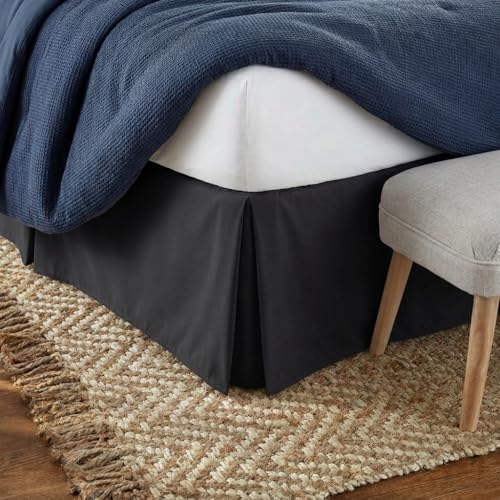
Spatial planning in a master bedroom or guest suite often hinges on millimeters of clearance between side rails, nightstands, and adjacent walls. Understanding what size is a queen bed measurements encompasses helps homeowners, apartment renters, and interior planners prevent tight walkway bottlenecks and ensure structural compatibility with foundational bed frames. A standard queen mattress traditionally measures 60 inches wide by 80 inches long, yet the outer footprint of platform frames, headboards, and perimeter rails can vary significantly depending on joinery design and upholstery depth. Factoring in frame clearance, foundation height, and mattress retention lips early in the design process guarantees that your sleeping space remains both practical and balanced.
Aside from the raw perimeter profile, vertical deck height and under-bed foundation mechanics heavily influence how bedding, storage bins, and bed skirts interact with the frame. When calculating structural clearance, taking account of center support rails, leg counts, and corner brackets prevents long-term mattress sagging while preserving valuable under-bed clearance. Matching your foundation profile to standard mattress dimensions also simplifies choosing drop-length dust ruffles, heavy fleece blankets, and protective canopy netting. Focusing on accurate frame dimensions and manufacturer tolerances ensures that your mattress rests securely without shifting off unlipped platform decks or crowding your bedroom layout.
| Award | Product | FCH Score About FCH ScoreThe FCH Score is our own rating from 0 to 10, based on performance, design and build, ease of use, and value. It reflects independent research and is never influenced by manufacturers, retailers, or affiliate commissions. Learn more › | |
|---|---|---|---|
| Best Overall |
Linen Market Bed Skirt - Ultra Soft Microfiber
|
9.2/10 | Buy |
| Best Premium |
 Bedsure Fleece Blankets Queen Size for Bed
|
9.1/10 | Buy |
| Best Value |
 Crystalsylara Taupe Gingham Bed Skirt Queen Size
|
8.9/10 | Buy |
 Bedsure Fleece Blankets Queen Size for Bed
|
8.9/10 | Buy | |
| Best Budget |
 Mosquito Net Bed Canopy for Girls,King Canopy Bed
|
8.8/10 | Buy |
 Mellanni Bed Skirt Queen Size
|
8.8/10 | Buy | |
 Linen Market Bed Skirt - Ultra Soft Microfiber
|
8.6/10 | Buy | |
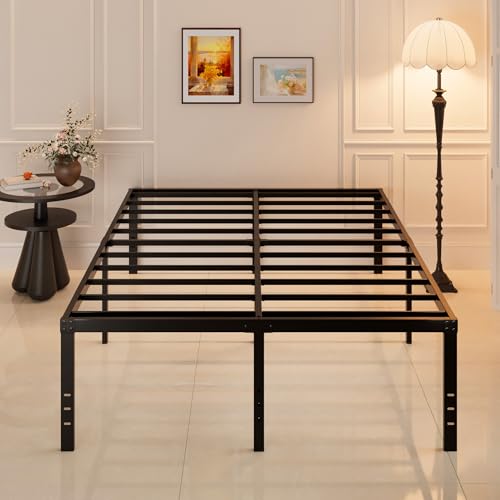 Maenizi 20 Inch Queen Bed Frame No Box Spring
|
8.3/10 | Buy | |
 Linen Market Bed Skirt - Ultra Soft Microfiber
|
8.0/10 | Buy |
Understanding Queen Bed Dimensions, Frame Tolerances, and Room Planning
A standard queen mattress measures 60 inches wide by 80 inches long, providing an optimal balance between personal sleeping space and manageable bedroom floor coverage. While these core mattress dimensions serve as the universal manufacturing benchmark across North America, the true spatial footprint of a queen sleeping system depends heavily on your bed frame construction and headboard profile. Understanding how frame architecture, under-bed foundation clearance, and top bedding dimensions work together ensures that your bedroom layout remains functional and visually balanced.
Standard Queen Mattress Dimensions and Industry Tolerances
Standard queen mattresses are manufactured with baseline nominal dimensions of 60 inches in width and 80 inches in length, which translates to 152.4 centimeters by 203.2 centimeters. In terms of overall surface area, a standard queen provides 4,800 square inches of resting space, offering each partner in a couple 30 inches of personal width. These dimensions make the queen size the most widely adopted sleeping format for master suites and guest rooms alike.
Production tolerances across mattress manufacturers can introduce minor variations ranging from half an inch to a full inch in either direction. Variations in foam expansion, perimeter coil encasements, and quilted tufting can alter the exact width or length when measured from seam to seam. Mattress height also varies dramatically across the market, ranging from slim 8-inch low-profile models to plush hybrid builds exceeding 14 inches. Recognizing these height differences is essential, as mattress thickness dictates your final sitting height and determines the required drop length for your bedding accessories.
Internal Frame Pocket Versus External Bed Frame Footprints
A frequent mistake during bedroom planning is assuming that the outer dimensions of a bed frame will match the 60-by-80-inch footprint of the mattress. Minimalist steel platform frames often keep their exterior boundaries extremely close to mattress dimensions to preserve walking space. For example, the Maenizi queen platform bed frame features an external profile measuring 79.6 inches long by 59.6 inches wide, fitting neatly within standard queen boundaries while eliminating wasted perimeter bulk.
Upholstered bed frames, wooden sleigh beds, and storage foundations with integrated side ledges significantly increase the exterior footprint. Padded headboards can easily add 3 to 8 inches of depth along the wall, while thick upholstered side rails often extend the width by 2 to 5 inches on each side. When designing bedroom traffic lanes, measuring the exterior perimeter of the assembled frame rather than just the mattress pocket prevents unexpected crowding near doorways, wardrobes, and windows.
Perimeter lip depth within the frame deck also plays a functional role in stabilizing your sleep setup. Recessed platform frames include a slight lip, typically between 0.5 and 1.5 inches deep, designed to seat the mattress securely and prevent lateral sliding during normal movement. Flush platform frames lack this recessed channel, requiring either non-slip friction pads or a snugly tailored fitted sheet to keep the mattress properly centered over the foundation.
Vertical Profile, Deck Height, and Sitting Ergonomics
The total height of your bed system directly influences daily ergonomic comfort, particularly when sitting on the edge of the mattress to put on shoes or standing up in the morning. An ideal assembled bed height generally places the top of the mattress between 22 and 26 inches above the finished floor, allowing a sleeper’s knees to bend at a comfortable 90-degree angle. Achieving this target height requires balancing the elevation of your frame deck with the overall thickness of your mattress.
Modern platform foundations come in several distinct height profiles to suit different mobility needs and aesthetic preferences. Standard platform beds often sit between 12 and 14 inches off the floor, which pairs naturally with contemporary 10-to-12-inch hybrid or foam mattresses. Higher elevated designs, such as the 20-inch tall Maenizi steel platform frame, raise the foundation significantly to maximize vertical storage utility. When pairing a 20-inch frame with a thick mattress, total bed height can reach over 30 inches, creating an elevated perch that requires deliberate spatial planning.
Under-Bed Storage Clearance and Leg Foundation Mechanics
Vertical under-bed clearance is one of the most practical spatial assets in compact apartments and modern homes. A platform frame that provides 14 to 18 inches of open space underneath easily accommodates standard plastic storage totes, extra duvets, and seasonal footwear bins. By moving bulky items directly under the sleeping deck, sleepers can keep surrounding closet space and floor areas free from visual clutter.
Structural weight support becomes increasingly critical as under-bed elevation increases. Heavy-duty metal platform beds frequently utilize a multi-leg architecture to distribute static and dynamic loads evenly across the floor. The Maenizi 20-inch frame incorporates a 9-leg support layout, positioning three legs along each side rail and three additional posts beneath the central longitudinal beam. This multi-angle bracing resists lateral sway and prevents the central beam from dipping under sleeper weight.
Center support legs must maintain firm, even contact with the subfloor to prevent frame distortion over time. When placing elevated metal or wooden frames onto plush carpeting, center legs can sink unevenly if not properly leveled, leading to frame squeaks and joint racking. Adjusting leveling glides on all center support posts ensures uniform load distribution and prevents structural stress when heavy mattresses are placed on top.
Slat Spacing, Center Beams, and Foundation Support Standards
Modern platform bed frames are engineered to eliminate the need for a traditional box spring, relying instead on integrated wooden or steel slat grids. Slat gap spacing is a vital structural specification that directly affects mattress longevity and warranty validity. Most mattress manufacturers require slat gaps to be less than 3 inches apart to provide continuous support and prevent foam layers from extruding downward between open slats.
Steel slat platforms offer high rigid strength and consistent airflow through the mattress underside, helping dissipate body heat and moisture during sleep. Solid wood slats, such as those made from birch or pine, provide slight natural flex but require sturdy center T-beams to prevent longitudinal bowing. Regardless of slat material, a robust central support beam spanning from the headboard to the footboard is essential on any queen frame to support the center where sleeper weight concentrates.
Bed Skirt Drop Lengths and Tailored Fits
Bed skirts provide a decorative finishing touch while concealing frame hardware, box springs, and stored bins beneath the sleeping deck. Selecting the appropriate bed skirt requires measuring the exact vertical drop from the top of the foundation deck down to the finished floor. Standard queen bed skirts measure 60 inches wide by 80 inches long across the deck platform, but their side drop lengths vary to match different frame heights.
Tailored microfiber bed skirts, such as the Linen Market queen bed skirt, commonly feature a 14-inch drop designed to fit traditional bed frames and box spring foundations. If your foundation sits slightly higher or your mattress rests on an elevated riser, options like the Mellanni queen bed skirt offer a 15-inch tailored drop with corner pleats for a clean drape. For higher frames or farmhouse decor, cotton gingham bed skirts from CrystalSylara provide a 16-inch drop that covers broader vertical openings without dragging on the carpet.
Using a bed skirt with an incorrect drop length disrupts the visual balance of the entire bedroom. A skirt that is too short leaves stored containers and metal legs exposed, while an excessively long drop pools fabric on the floor, collecting dust and creating a tripping hazard. Double-checking your deck-to-floor clearance with a tape measure before purchasing bedding accessories ensures a clean, tailored finish that hangs just above the carpet pile.
Top Bedding Sizing: Blankets, Comforters, and Overhang Coverage
Top bedding dimensions must account for both the 60-by-80-inch queen mattress surface and the vertical drop on three open sides. A standard queen blanket or comforter measures approximately 90 inches wide by 90 inches long, as seen on heavy GentleSoft fleece blankets from Bedsure. This sizing provides 15 inches of fabric overhang on both the left and right sides of the bed, along with 10 inches of coverage at the foot.
Calculating fabric overhang is especially important if you sleep on a thicker hybrid mattress or share the bed with a partner. A 14-inch thick mattress combined with a 90-inch wide blanket leaves just enough fabric to cover the side edges without exposing the mattress core. Sleepers who prefer a deep, generous drape that extends past the side rails often size up to king blankets, which measure roughly 104 to 108 inches in width.
Blanket weight and fabric composition also affect how bedding rests across a queen frame. High-density fabrics, such as 500 GSM flannel fleece with anti-static threading, drape smoothly over the mattress edges without clinging awkwardly to fitted sheets. Choosing blankets with durable edge stitching helps maintain structural shape through repeated washing, preventing unsightly shrinkage that could reduce essential overhang coverage.
Overhead Canopy and Vertical Space Clearance
Adding vertical elements such as canopy netting or four-poster frames introduces overhead dimensional considerations into your bedroom layout. Dome-style netting and decorative canopies, such as Comtelek canopy netting, feature substantial dimensions including a hanging height of 98.5 inches and a lower base perimeter spanning 500 inches. With a 24-inch ceiling hoop, these canopies flare outward to drape gracefully over full, queen, and king beds alike.
Ceiling height is the primary limiting factor when installing hanging canopy systems over a queen bed frame. Standard residential bedroom ceilings measure 8 feet, or 96 inches, which means a 98.5-inch canopy must be adjusted or slightly spread across the bed perimeter to avoid excessive pooling on the floor. Rooms with 9-foot or vaulted ceilings provide ideal clearance for suspended dome canopies, creating an elegant visual focal point without interfering with ceiling fans or light fixtures.
Bedroom Spatial Planning and Walkway Clearances
Proper spatial planning requires evaluating how a queen bed fits within your overall room dimensions. Interior designers recommend maintaining a minimum clearance of 30 to 36 inches around the perimeter of the bed frame on all three accessible sides. This clearance allows occupants to move freely through the room, make the bed comfortably, and access adjacent furniture without squeezing through narrow gaps.
Standard bedroom sizes dictate whether a queen frame is the appropriate choice for your floor plan. A bedroom measuring at least 10 feet by 10 feet can accommodate a standard 60-by-80-inch queen bed, but space for larger dressers and nightstands will remain somewhat tight. An ideal room size for a queen bed setup is 10 feet by 12 feet or 12 feet by 12 feet, which provides ample space for 24-inch bedside tables, opening closet doors, and standard walking paths.
Doorway swings and low architectural features must also be factored into room clearance calculations. Ensure that bedroom entry doors, closet doors, and dresser drawers can open fully without colliding with the corners of your bed frame or footboard. Positioning the bed against the longest unbroken wall in the room usually provides the best clearance and preserves natural sightlines from the doorway.
Queen Versus Full, King, and California King Sizing
Comparing the queen mattress against neighboring standard sizes highlights why it remains the most versatile option for modern households. A standard full bed measures 54 inches wide by 75 inches long, making it 6 inches narrower and 5 inches shorter than a queen. While a full bed saves valuable floor space in small guest rooms, single adults over six feet tall often find the 75-inch length restrictive for comfortable sleeping.
Stepping up from a queen to a king mattress increases sleeping width significantly from 60 inches to 76 inches, while maintaining the same 80-inch length. This provides an additional 16 inches of personal space, making king frames ideal for master suites with at least 12 by 12 feet of floor space. Conversely, a California king measures 72 inches wide by 84 inches long, trading 4 inches of width for an extra 4 inches of length to accommodate taller sleepers in narrower bedrooms.
Choosing between these sizes depends on balancing personal comfort against available bedroom square footage. A queen bed provides adequate width for couples without dominating smaller master bedrooms or restricting walking paths. For guest rooms and secondary suites, the queen format offers generous hospitality for visiting adults without requiring the heavy structural footprint of a king frame.
Assembly Integrity, Hardware Connections, and Squeak Prevention
The structural longevity of any bed frame depends on fastener quality and rigid joint alignment during initial setup. Heavy-duty platform beds use machine bolts and threaded steel inserts rather than direct wood screws, allowing the frame to withstand dynamic shifting without joint loosening. Platform frames like the Maenizi model feature pre-drilled connection holes along the corner legs, allowing sleepers to attach universal headboard or footboard brackets securely without drilling into the frame structure.
Persistent frame creaking and squeaking usually stems from metal-on-metal friction or loose joint fasteners. Placing EVA foam dampening tape along center support rails and between slat contact points isolates vibration and eliminates nocturnal noise. Applying nylon washers between bolt heads and steel brackets also creates a flexible barrier that absorbs joint torsion during normal movement.
Performing periodic hardware checks helps maintain frame stability and protects your mattress investment. Checking bolt tightness after the first 30 days of use ensures that normal settling has not caused fasteners to back out of their threaded sleeves. Regular maintenance keeps the frame rigid, prevents center support legs from tilting, and ensures your queen sleep system remains completely stable over years of daily use.
Navigating queen bed dimensions involves much more than memorizing the standard 60-by-80-inch mattress footprint. By evaluating exterior frame dimensions, vertical deck clearances, slat spacing integrity, and bedding overhang measurements, you can design a balanced bedroom space that supports restful sleep. Accurate spatial planning ensures that your bed frame fits harmoniously within your room layout while providing sturdy, reliable support for your mattress foundation.
About the author
Monique Valeris is a home editor with extensive experience covering interior design, decorating ideas, and practical household finds. Her work explores accessible furniture, storage solutions, and ways to make living spaces feel personal without overlooking budget.