
Why Office Chair Is Important: Practical Ergonomic Guide for 2026
Learn why office chair is important for spinal support, healthy circulation, and everyday comfort in this detailed November 2026 guide.
 By Janae McKenzie
Updated November 23, 2026


Sitting stationary for seven to ten hours every day places tremendous hydrostatic pressure on the lumbar spine and strains the surrounding musculature. When desk workers rely on dining chairs, flat wooden stools, or broken-down foam cushions, the pelvis inevitably rotates backward into an unhealthy posterior pelvic tilt. This slouching posture compresses intervertebral discs, restricts blood circulation through the femoral arteries, and triggers chronic tension along the trapezius muscles. Understanding why office chair is important reveals that a dedicated task chair is not a luxury decorative item, but a critical mechanical interface designed to preserve natural spinal curves. When your workstation incorporates adaptable seat heights and intentional lumbar support, your body can sustain prolonged productivity without the debilitating ache of postural fatigue.
Proper seating works in direct tandem with your surrounding workspace dimensions to keep joints aligned at neutral ninety-degree angles. If you are configuring a dual-purpose room where desk clearance shares floor space with other major furniture, consulting our guide to standard furniture dimensions can help you plan adequate clearance for rolling casters. Quality office seating supports active movements throughout the shift, relieving contact pressure under the thighs and discouraging forward neck craning toward computer monitors. Investing in thoughtful adjustments like pneumatic lift travel and reclining tension fundamentally changes how your body endures demanding work routines.
| Award | Product | FCH Score About FCH ScoreThe FCH Score is our own rating from 0 to 10, based on performance, design and build, ease of use, and value. It reflects independent research and is never influenced by manufacturers, retailers, or affiliate commissions. Learn more › | |
|---|---|---|---|
| Best Overall |
COMHOMA Ergonomic Computer Desk Chair with Flip-Up
|
8.6/10 | Buy |
| Best Value |
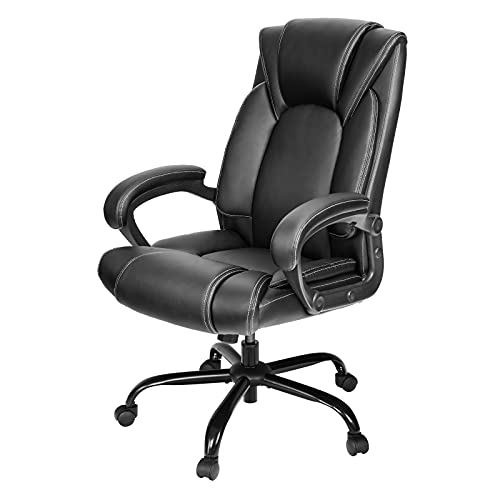 OUTFINE Ergonomic Executive Desk Chair with Spring |
8.1/10 | Buy |
COMHOMA Ergonomic Computer Desk Chair with Flip-Up
The COMHOMA Ergonomic Computer Desk Chair features 90-degree flip-up armrests and a 3.93-inch pneumatic gas lift that easily stows beneath workstations to conserve floor space. It is an affordable, practical seating companion for students, remote professionals, and apartment dwellers outfitting compact home office desks.
Pros
- 90-degree flip-up armrests tuck completely beneath desk edges, making it ideal for tight spaces and compact desks
- Adaptive lumbar contour and breathable mesh help maintain cool comfort during long sitting routines
- Sturdy metal base paired with a 3.93-inch gas lift provides reliable seated height pairing for standard desks
- Quick assembly with all required tools and hardware included in the box
Cons
- Pneumatic height adjustment range is limited to 3.93 inches, which suits standard fixed-height sitting desks but not standing heights
- Armrests flip up but lack multi-directional height, width, or depth adjustments
- Lightweight 11.8-pound overall build may feel less substantial for users seeking heavy executive furniture
OUTFINE Ergonomic Executive Desk Chair with Spring
Designed to anchor home office workstations and computer desks, the OUTFINE Executive Desk Chair features an interior pocket spring cushion, a heavy-duty Class 4 gas lift supporting up to 300 pounds, and a smooth tilt-rocking function. It is a compelling seating option for remote professionals and students seeking plush, sofa-like comfort during seated desk hours.
Pros
- Class 4 gas lift provides stable, secure vertical travel from 19 to 21.5 inches
- Integrated spring coils inside the seat cushion help maintain shape and prevent premature foam sagging
- Hydrolysis-resistant bonded leather offers a refined executive look that resists typical humidity-induced peeling
- Sturdy base structure supports up to 300 pounds and exceeds BIFMA durability standards
Cons
- Fixed armrests cannot be adjusted for height or flipped up, which may limit clearance under shallow desks or low keyboard trays
- Bonded leather upholstery can retain warmth during prolonged sitting sessions compared to open-mesh alternatives
- Tilt mechanism offers free rocking rather than multiple locked recline angles
The Biomechanical and Practical Reasons Why an Office Chair Is Essential
Prolonged sitting is one of the most mechanically taxing activities human bodies perform on a daily basis. When individuals sit in rigid, non-adjustable seating, their musculoskeletal framework absorbs continuous vertical stress without adequate mechanical assistance. Understanding why office chair is important begins by examining how posture, blood circulation, and mechanical adjustability interact during an eight-hour workday. High-performance task seating mitigates static muscle fatigue by encouraging dynamic body movements and distributing body weight evenly across engineered support zones. Investing in an intentional chair transforms a static workstation into an active environment that protects long-term physical health.
Preserving Spinal Lordosis and Relieving Intervertebral Pressure
Human spines naturally form an inward curve at the lower back known as lumbar lordosis. When a worker slumps forward on an unsupportive seat, this natural lordotic curve flattens out, forcing the pelvis into an unhealthy posterior tilt. This mechanical distortion places excessive compressive force on the lumbar discs, especially at the vulnerable L4-L5 and L5-S1 vertebrae. Over time, uneven hydrostatic pressure inside these intervertebral discs can lead to chronic bulging, nerve impingement, or painful muscle spasms. An ergonomic task chair counteracts this damaging strain by incorporating a contoured backrest that reinforces the natural arch of the spine.
Chairs like the COMHOMA Office Chair with Flip-up Armrests address this concern by utilizing adaptive lumbar support designed to move with the user during subtle posture shifts. When the lumbar zone responds dynamically as you recline or lean forward, spinal discs experience less asymmetrical compression. Without continuous sacral and lumbar contact, the erector spinae muscles must contract continuously to keep the torso upright. This muscular exertion leads to painful fatigue by mid-afternoon, causing workers to slouch even further into poor postures. Maintaining the natural curvature of the spine preserves long-term spinal disc health and prevents debilitating chronic lower back conditions.
Promoting Lower Limb Circulation and Protecting the Femoral Arteries
Standard hard-edged chairs create a dangerous focal point of pressure directly behind the knees, known anatomically as the popliteal fossa. When a seat cushion features a sharp or overly rigid front edge, it constricts both the popliteal veins and the sciatic nerve bundle. This continuous restriction impedes blood flow returning to the heart, which often manifests as tingling feet, hamstring cramping, and heavy leg fatigue. Prolonged vascular compression under the thighs can even exacerbate swelling in the ankles after long sitting sessions. Ergonomically shaped seat pans solve this physiological problem through a downward sloping waterfall edge.
A proper seat design allows blood to circulate freely through the femoral arteries without pooling in the lower extremities during long sitting blocks. Ergonomic models ensure there is adequate popliteal clearance, allowing roughly two to three finger widths of empty space between the back of your knee and the front edge of the seat pan. In executive models like the OUTFINE Office Chair Executive Office Chair Desk, a generously proportioned cushion measuring 21.2 inches wide by 20.1 inches deep provides balanced thigh distribution across its surface. Distributing weight broadly across the upper legs eliminates localized pressure points that could otherwise hinder vascular circulation. Users can maintain steady energy levels throughout the workday because healthy blood flow supplies oxygen to working leg muscles.
Facilitating Dynamic Movement with Recline and Rocking Mechanisms
The human body was never engineered to remain completely motionless for multiple hours at a time. Static sitting locks the hip flexors in a shortened state and increases intra-abdominal pressure against the pelvic floor. When muscles stay contracted without rhythmic movement, metabolic waste products accumulate, generating that familiar feeling of midday stiffness. Modern office chairs incorporate recline and tilt-tension mechanisms that allow users to rock between ninety and one hundred twenty degrees. This gentle back-and-forth movement shifts the user’s center of gravity, effectively transferring upper body weight away from the pelvis and onto the chair’s backrest.
The COMHOMA desk chair provides an adjustable rocking function operating between ninety and one hundred twenty degrees, managed by an intuitive tension knob beneath the seat pan. Loosening or tightening this knob calibrates the recline resistance to match the user’s specific upper body mass. Reclining at an angle between one hundred and one hundred ten degrees opens up the hip angle, reducing disc pressures significantly compared to an upright vertical posture. Engaging the rocking motion periodically throughout the afternoon stimulates core muscle engagement and prevents joints from stiffening. Desk workers can alternate between upright task focus and relaxed brainstorming postures without leaving their seats.
Eliminating Trapezius and Shoulder Strain with Configurable Armrests
Unsupported arms account for a massive percentage of upper back, neck, and shoulder complaints reported by desk workers. The average human arm weighs roughly ten to twelve pounds, and without armrests, the trapezius and levator scapulae muscles must suspend that weight continuously. Over several hours of keyboard and mouse work, this static muscular load triggers tension headaches, neck stiffness, and painful trigger points between the shoulder blades. High-utility office chairs feature adaptable armrests positioned to support the forearms while maintaining relaxed shoulders. Resting the forearms at desktop level unloads the shoulder girdle and lets the upper body relax naturally.
Armrest design can vary significantly based on functional priorities and daily workflow habits. The COMHOMA model incorporates ninety-degree flip-up armrests that let users transition to an armless configuration whenever playing instruments or sliding close to a work surface. Conversely, the OUTFINE executive chair provides thick waterfall-like padded arm cushions that protect sensitive elbow nerves from hard plastic edges. Both approaches address different physical needs, whether a user values spatial clearance or thick cushioning for continuous arm resting. Selecting armrests that clear standard desk heights prevents users from shrugging their shoulders upward, ensuring the neck and upper spine remain completely relaxed.
Ensuring Mechanical Stability with Heavy-Duty Gas Lifts and Base Frames
Mechanical stability is paramount when evaluating the importance of dedicated desk seating over makeshift furniture. Budget stools or worn chairs frequently suffer from sinking pneumatic cylinders, wobbling center shafts, and brittle plastic wheel bases. A failing gas lift slowly loses nitrogen pressure throughout the shift, dropping the seat cushion unpredictably and throwing your knees above your hips. Quality chairs utilize verified cylinders, such as the heavy-duty Class 4 gas lift found in the OUTFINE executive chair, to guarantee stable elevation under daily load. A reliable pneumatic cylinder holds its set height firmly without requiring annoying manual readjustments.
In addition to reliable pneumatic height adjustments, structural testing establishes safe load thresholds for heavier users. The OUTFINE design has undergone structural evaluations exceeding BIFMA industry standards to safely support a maximum weight load of 300 pounds. Sturdy metal star bases and reinforced five-point foundations distribute downward forces evenly across all casters, preventing tipping hazards during deep recline. Reliable structural components eliminate the distracting creaks and side-to-side wobbles that disrupt concentration during intensive work sessions. Users can shift their posture with confidence, knowing the mechanical chassis beneath them remains completely rigid.
Cushion Resilience and Upholstery Longevity for All-Day Endurance
Seat cushion degradation is one of the most common reasons desk workers experience sharp coccyx pain after only a few months of ownership. Low-density polyurethane foam quickly collapses and bottoms out under regular body heat and weight, leaving the user sitting directly against a hard plywood baseboard. To prevent this rapid degradation, premium desk chairs integrate resilient support cores, such as high-density molded foam or independent inner spring assemblies. The OUTFINE chair features an integrated spring cushion embedded within its thick padding, mimicking the adaptive bounce of sofa seating to prevent premature foam sagging. This hybrid spring design distributes vertical pressure across multiple mechanical coils rather than relying entirely on foam compression.
Upholstery performance also dictates long-term thermal comfort and hygienic durability in demanding home office environments. Breathable elastomeric mesh, such as the scratch-resistant backrest fabric used by COMHOMA, maximizes air circulation to prevent uncomfortable sweat accumulation during humid summer workdays. For users who prefer executive leather styling, OUTFINE utilizes five-year hydrolysis-resistant bonded leather engineered to keep peeling rates below one percent across several years of use. Choosing materials that resist wear, perspiration, and mechanical stress ensures that your seat maintains its supportive properties over thousands of working hours. Proper material engineering prevents costly replacements and keeps the seating surface looking professional.
Workspace Spatial Integration and Compact Room Optimization
The physical footprint of a desk chair directly affects room circulation, ergonomics, and overall organization in multi-purpose living spaces. In smaller apartments or hybrid bedrooms, a bulky, fixed-arm chair often collides with desk aprons and blocks walking pathways. Chairs with foldable components, such as the flip-up armrests on the COMHOMA model, can tuck completely beneath table surfaces to reclaim up to one square meter of open floor area. This compact storage capability makes ergonomic seating viable even in tightly constrained home work zones. Keeping the floor clear reduces visual clutter and makes small home offices feel more spacious.
When planning an efficient work corner inside a shared bedroom, furniture dimensions must be carefully calculated so rotating chairs do not bump into larger furnishings. If your home office layout shares square footage with a standard guest bed, checking full-size bed width measurements will help you maintain adequate rolling room behind your desk. Similarly, measuring clearances against larger sleeping setups by consulting extra-length full mattress dimensions ensures your rolling chair casters do not scratch bed frames or pinch rugs. Maintaining adequate spatial clearances allows smooth chair movement and prevents the frustration of confined workstation bottlenecks. A properly integrated office chair harmonizes with the rest of the room without dominating the available walking paths.
Systematic Daily Adjustments and Postural Calibration
Even the most advanced ergonomic office chair cannot deliver its full benefits if it is improperly calibrated to the user’s specific body proportions. Postural setup should always begin at the base by setting seat height so the soles of your feet rest completely flat on the floor. The COMHOMA desk chair provides 3.93 inches of pneumatic travel, accommodating various leg lengths to establish a neutral ninety-degree bend at the knees. The OUTFINE executive chair offers a seat height range from 19 inches to 21.5 inches, measured from the cushion top to the floor, matching taller desk setups. Getting this baseline elevation right ensures your thighs remain parallel to the ground without downward angling.
After establishing proper foot placement, desk workers should tune the backrest recline tension to provide gentle counterpressure without feeling excessively stiff. The user should sit fully back against the contoured lumbar support rather than perching on the front edge of the seat cushion. Armrests should be adjusted so elbows rest comfortably at your sides without pushing your shoulders upward toward your ears. Taking two minutes to perform these systematic adjustments ensures your chair actively unloads your spinal joints from morning until evening. Consistently checking these settings after someone else uses your chair maintains optimal ergonomic protection.
Ultimately, investing in a properly engineered office chair is an investment in your musculoskeletal health, mental focus, and long-term vitality. Rather than enduring persistent lower back stiffness or leg numbness, a supportive chair with dynamic recline, responsive lumbar support, and resilient cushioning preserves your natural alignment throughout the longest work sessions. By taking the time to match seat dimensions, base stability, and upholstery materials to your daily routine, you create a comfortable desk environment that sustains your physical well-being for years to come. Ergonomic seating transforms daily desk work from a source of bodily strain into a supportive foundation for sustained professional success.
About the author
Janae McKenzie is a shopping journalist with a background in reviewing furniture, décor, and household products. Her sofa coverage draws on hands-on experience, examining comfort, stability, and style to help readers understand what matters beyond appearance.