
What Size Desk for 2 Monitors and Pc: Practical Guide for 2026
Determine what size desk for 2 monitors and pc to optimize focal viewing distance and tower clearance for your workstation in October 2026.
 By Noah Kaufman
Updated October 12, 2026
By Noah Kaufman
Updated October 12, 2026

Setting up a dual-display workstation requires balancing screen width, eye-to-panel focal distance, and chassis clearance on the floor or desktop surface. When planning your layout, knowing what size desk for 2 monitors and pc prevents crowded peripheral placement and eliminates neck strain from awkward viewing angles. Two typical 24-inch or 27-inch displays measure roughly 42 to 48 inches across when placed side by side, while a standard mid-tower computer case requires an additional 8 to 10 inches of horizontal clearance. A desktop surface that spans at least 55 to 60 inches wide and 24 to 30 inches deep generally offers the necessary breathing room for both screens and hardware.
Desktop depth matters just as much as overall width because shallow surfaces force monitors uncomfortably close to your eyes. In multipurpose bedrooms where office desks share floor area with other furniture, measuring standard bed dimensions helps you calculate available square footage before purchasing a large work surface. Proper cable routing channels, integrated power outlets, and elevated monitor shelves also preserve usable space beneath your screens. Selecting the right desk dimensions ensures your workstation stays comfortable, organized, and structurally sound throughout long work or gaming sessions.
| Award | Product | FCH Score About FCH ScoreThe FCH Score is our own rating from 0 to 10, based on performance, design and build, ease of use, and value. It reflects independent research and is never influenced by manufacturers, retailers, or affiliate commissions. Learn more › | |
|---|---|---|---|
| Best Premium |
Casaottima 98'' 2 Person Gaming Desk with LED
|
8.3/10 | Buy |
| Best Overall |
 Pamray 58 Inch Gaming Computer Desk with Monitor
|
9.2/10 | Buy |
 Pamray 32 Inch Small Computer Desk with Monitor
|
8.4/10 | Buy | |
| Best Value |
 PRAISUN 63 inch Gaming Desk, LED & Power Outlets
|
8.8/10 | Buy |
 Kado Dual Monitor 2-Pack 24" Curved 1500R
|
8.1/10 | Buy | |
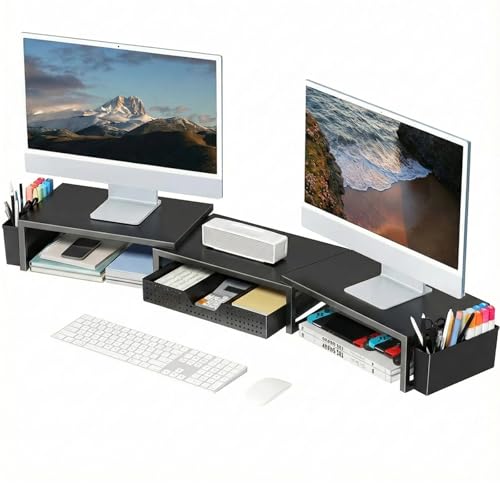 OPNICE Desk Organizers and Accessories
|
8.6/10 | Buy | |
| Best Budget |
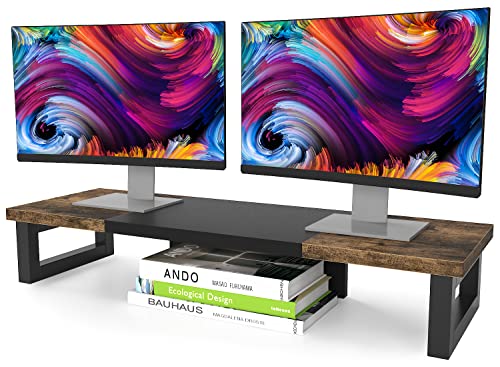 WESTREE Dual Monitor Stand Riser
|
8.9/10 | Buy |
 ECOLOVI Adjustable Wood Computer Monitor Stand
|
8.8/10 | Buy |
Calculating the Ideal Desk Dimensions for Dual Monitors and a PC Tower
Choosing the right desk size for two monitors and a computer tower depends on whether you place the chassis on the work surface or down below. A desktop spanning at least 55 to 60 inches wide and 24 to 30 inches deep is the baseline standard for accommodating dual screens alongside a standard computer tower. If you position the PC case on a dedicated lower shelf or on the floor, a 48-inch desk can suffice for twin 24-inch screens. Elevating all your hardware onto a single work surface requires adequate horizontal clearance, robust frame support, and sufficient depth to maintain comfortable viewing angles.
Horizontal Width Requirements for Dual Screens and PC Towers
Calculating the horizontal footprint begins with measuring the actual physical width of your display panels rather than their diagonal marketing size. A pair of standard 24-inch monitors placed side by side creates a horizontal span of roughly 42 to 44 inches depending on bezel thickness. Upgrading to dual 27-inch screens expands that footprint to approximately 48 to 50 inches, which will completely dominate a small 48-inch desk. Angling the secondary screen inward creates a more natural viewing arc and shaves two to three inches off the overall width.
A standard mid-tower computer chassis introduces an additional 8 to 11 inches of width to your surface requirements. In addition to the physical metal enclosure, the chassis requires at least three inches of breathing room around its vents to ensure proper cooling. When you combine dual 27-inch screens measuring 48 inches wide with a 9-inch computer case and required ventilation clearance, the equipment occupies nearly 60 inches of horizontal span. Desks that offer between 58 and 63 inches of surface width provide the exact dimensional sweet spot needed to keep all hardware on top without screens hanging over the edges.
Users who pair 32-inch displays or curved panels must account for even wider spans that frequently exceed 56 inches for the screens alone. In those expansive setups, a 60-inch desk leaves no room for a computer tower on the desktop surface. You would need an extra-wide surface measuring 70 inches or more, or a dedicated two-person workstation, to hold such large displays alongside a full-sized computer case. Evaluating your specific monitor dimensions prior to purchase prevents the frustrating discovery that your computer case must be relocated to the floor due to missing surface space.
Ergonomic Depth and Visual Focal Distance Clearance
Desktop depth represents a crucial ergonomic metric that buyers frequently underestimate when shopping for home workstations. Placing two large computer monitors closer than 20 inches from your face forces your eyes to constantly refocus and causes significant visual fatigue over a full workday. Ergonomists generally suggest maintaining a viewing distance of 20 to 30 inches between your eyes and the center of the display panels. A desk depth of 24 inches is the absolute functional minimum for dual-screen setups, while a 30-inch deep desktop provides an ideal focal buffer.
Surface depth also dictates the functional room available for everyday input peripherals in front of your display hardware. A standard mechanical keyboard and wrist rest consume roughly 8 to 10 inches of desktop depth, while a full-sized mouse pad requires similar clearance. When an external monitor rests on its factory stand, that base can easily intrude 7 to 9 inches forward into the workspace. On a shallow 20-inch desk, you will find your keyboard pushed directly against the base of the monitors with no space remaining for forearm support.
Installing an aftermarket dual-monitor VESA desk clamp can help reclaim several inches of shallow desk depth by suspending the monitors above the surface. However, monitor mounting arms feature articulated steel elbows that often extend several inches backward behind the desk frame. If your desk sits flush against a bedroom wall, those monitor arms will prevent the desk from resting against the wall unless pulled forward. Verifying desktop depth ensures you can maintain proper posture with relaxed shoulders and 90-degree elbow angles without your screens looming uncomfortably close.
Deciding Between Desktop and Floor Tower Placement
Deciding where to place your computer tower has a major impact on the desk dimensions you actually require. Keeping your computer tower on top of the desk showcases custom interior components and keeps front-panel USB ports, audio jacks, and power switches within convenient reach. Desktop placement also significantly limits internal dust accumulation compared to sitting directly on the floor where carpet fibers quickly clog intake fan filters. However, this configuration demands a desk width of at least 58 to 63 inches to prevent crowded peripheral spacing.
Moving the computer chassis off the main surface instantly frees up roughly 10 inches of prime horizontal desktop width. This arrangement allows users to comfortably fit dual 24-inch or 27-inch monitors onto a more compact 48-inch or 50-inch desk surface. If you choose to position your tower below, never rest the chassis directly on thick carpet where power supply ventilation can become completely choked. Selecting a desk with an integrated lower shelf or side-mounted tower stand elevates the machine off the flooring while protecting internal airflow.
Placing the tower on the floor or a low side shelf requires longer display and peripheral cables to bridge the vertical distance to your monitors. Standard three-foot cables will usually stretch taut or disconnect entirely when routed through cable management raceways from a low PC to twin elevated screens. Purchasing six-foot or ten-foot DisplayPort and HDMI cables provides the slack required for clean routing. Ensuring adequate cable slack prevents port damage and keeps peripheral connections secure behind your workstation.
Maximizing Workspace with Monitor Risers and Elevated Shelves
Monitor stand risers and integrated upper shelving offer an exceptional spatial solution for desks that feature limited depth or width. Raising your dual screens onto a dedicated wood or steel riser lifts the monitor stands off the main desktop plane. This architectural elevation creates an open space beneath the riser that can measure 4 to 6 inches in height and span the entire width of your displays. Users can easily slide full-sized keyboards, graphic tablets, and audio interfaces under the shelf when they are not in active use.
Standalone wooden and metal monitor risers, such as dual-display storage shelves with built-in slide-out drawers, allow you to upgrade an existing flat desk with zero assembly hassle. Alternatively, modern computer workstations frequently arrive with full-width integrated monitor shelves supported by steel uprights. These built-in platforms elevate dual screens to a natural eye-level viewing height without requiring separate accessories. By lifting the screens off the primary desktop, an integrated shelf allows a 24-inch deep desk to provide the functional usable space of a much deeper workstation.
Elevating screens on a riser also helps align the top third of each display with your horizontal eye level. When screens sit too low on a flat desktop, users instinctively tilt their heads forward and hunch their upper backs to read text, leading to cervical spine fatigue. A sturdy riser positions twin screens at an upright viewing angle that naturally encourages healthy posture. Incorporating a riser is one of the most effective ways to make a moderately sized 55-inch desk function like a much larger executive workstation.
Desktop Core Strength and Weight Capacity for Heavy Payloads
Calculating the structural load requirements of a dual-monitor workstation is just as important as measuring physical length and depth. A standard desktop computer tower weighs between 25 and 45 pounds depending on the chassis material, liquid cooling components, and graphics hardware installed. Two modern 24-inch or 27-inch monitors contribute an additional 15 to 25 pounds, while heavy-duty steel monitor arms can add another 10 to 15 pounds to the setup. When you include speakers, power bricks, and desk accessories, your workstation must effortlessly support 60 to 90 pounds of resting static hardware.
The structural composition of the desktop core dictates whether the surface can withstand concentrated clamping forces. Hollow-core paper honeycomb tops and low-density particle boards are highly vulnerable to crushing or cracking when subjected to the tight pressure of a dual-monitor C-clamp. Solid engineered wood, dense P2 particle board, and solid hardwood slabs offer the shear strength required to anchor heavy multi-display mounts safely. If you must mount a heavy dual-screen clamp to a thinner composite desktop, installing metal reinforcement plates spreads the clamping force across a broader surface area.
Structural frame architecture plays a decisive role in eliminating lateral wobble and annoying screen shudder while typing. Desks constructed with reinforced steel legs, thick gauge tubing, and rear X-shaped cross braces offer significantly higher stability than lightweight modular tables. A desk rated for at least 150 to 200 pounds of static weight capacity ensures the frame will not bow, shift, or flex under heavy equipment. Investing in a rigid steel-framed desk guarantees that your expensive displays and PC tower remain stable and safe during intense work or gaming sessions.
Cable Management, Built-In Power, and Knee Clearance
Powering two monitors, a gaming PC, illuminated accessories, and desktop audio gear generates a dense bundle of power leads and data cables. Without intentional cable management, wires will drape behind the desk, creating an unsightly hazard and risking accidental disconnects with your feet. Desks equipped with integrated power strips, AC outlets, and USB charging ports keep primary electrical connections on the workstation itself. Having power strips embedded directly into the desk top or rear frame eliminates the need to run multiple extension cords down to distant wall receptacles.
While integrated storage features like drawers and shelving provide convenient organization, they must not compromise your seated knee and leg clearance. An ergonomic workstation requires at least 20 to 24 inches of clear knee width and at least 15 to 18 inches of under-desk knee depth to allow comfortable movement. Desks with bulky drop-down center drawers or low horizontal support beams often strike your knees and prevent you from pulling your chair close to the edge. Ensuring that side shelves or drawers leave an open center span guarantees you can stretch your legs and swivel your chair without painful collisions.
Installing an under-desk cable raceway or wire tray beneath the rear edge of the desktop keeps heavy power bricks completely off the floor. Utilizing hook-and-loop straps or flexible cable sleeves bundles display cables into neat, discreet channels running directly to the computer case. Keeping cables organized also simplifies future hardware upgrades and component cleaning. When cables are properly secured, your entire dual-monitor setup looks streamlined, professional, and clutter-free.
Workstation Room Footprint and Spatial Planning
Planning the physical placement of a 55-inch to 63-inch desk within your home requires evaluating room doorways, window sills, and adjacent furniture. A workstation needs roughly 30 to 36 inches of open floor space behind the desk edge to accommodate your chair rolling backward without obstruction. In multipurpose bedrooms where office furniture must share floor area with beds and dressers, careful measurement prevents cramped living quarters. If you are coordinating a shared bedroom layout, consulting our shared bedroom furniture placement planning guide provides valuable spatial insight for balancing floor space across multiple large furnishings.
When configuring a home office workstation in a compact guest room or studio apartment, verifying clearance against existing furniture is essential. Reviewing twin mattress clearance measurements can help you visualize how much walkway remains when placing a wide gaming desk near bedroom fixtures. Leaving at least two feet of open walking aisle between the edge of your desk and any adjacent bed frame prevents a crowded, claustrophobic atmosphere. Proper spatial planning ensures that adding a generous dual-monitor workstation enhances your productivity without overwhelming the rest of your living space.
Selecting the best desk size ultimately comes down to balancing your available room square footage with your hardware dimensions. If you intend to house twin 24-inch or 27-inch displays alongside your computer tower on a single surface, target a desk measuring 58 to 63 inches wide and at least 24 inches deep. If room boundaries require a narrower 48-inch desk, relocate the PC chassis to a lower shelf and elevate your screens using a sturdy monitor riser. By verifying horizontal clearance, focal depth, and structural weight capacity before you buy, you can create a comfortable, ergonomic workstation tailored perfectly to your setup.
About the author
Noah Kaufman is a product-focused editor and writer with experience evaluating household equipment. His published furniture reviews include outdoor sofas, upholstered seating, and standing desks, often drawing on how products perform in everyday home settings.