
What Is Twin Size Bed in Cm: Dimensions and Sizing Guide for 2026
Check what is twin size bed in cm dimensions for November 2026, covering standard centimeter measurements, bed frame tolerances, and small bedroom layout strategies.
 By Nashia Baker
Updated October 13, 2026


Standard mattress dimensions often cause confusion when converting international furniture measurements for small bedrooms or guest rooms. Determining exactly what is twin size bed in cm gives homeowners, students, and parents the precise data required to verify room clearances, bed frame tolerances, and mattress compatibility. A standard US twin mattress measures 38 inches by 75 inches, which converts directly to 96.5 centimeters wide by 190.5 centimeters long. In retail listings, manufacturers commonly round these figures to 97 cm by 191 cm or 99 cm by 190 cm to account for fabric borders and production margins.
Proper spatial planning also involves understanding how mattress thickness and frame profiles interact with living spaces. Popular mattress options like the NapQueen 8 Inch Twin Size Mattress and the low-profile EGOHOME 5 Inch Twin Mattress for Kids deliver tailored support across different vertical profiles. Pairing these sleep surfaces with elevated foundations such as the Easllre 14Inch Metal Bed Frame,Twin Size Bed Frame maximizes usable floor area while eliminating the need for a separate box spring. Accurate metric sizing ensures that your slatted base, headboard brackets, and surrounding furniture function together without unexpected spatial conflicts.
| Award | Product | FCH Score About FCH ScoreThe FCH Score is our own rating from 0 to 10, based on performance, design and build, ease of use, and value. It reflects independent research and is never influenced by manufacturers, retailers, or affiliate commissions. Learn more › | |
|---|---|---|---|
| Best Overall |
NapQueen 8 Inch Twin Bamboo Charcoal Memory Foam
|
8.9/10 | Buy |
| Best Budget |
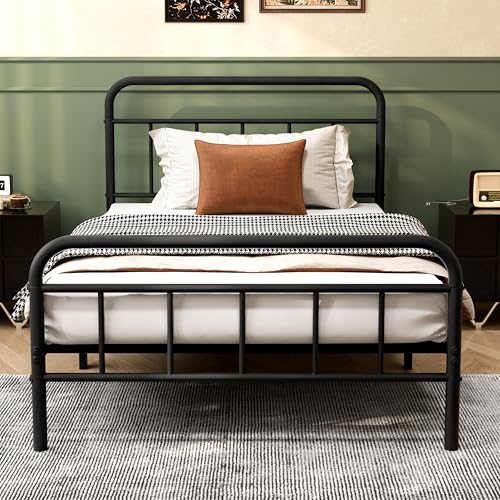 Easllre 14-Inch Twin Metal Bed Frame |
8.1/10 | Buy |
 EGOHOME 5 Inch Twin Mattress for Kids |
8.1/10 | Buy |
NapQueen 8 Inch Twin Bamboo Charcoal Memory Foam
The NapQueen 8-inch Twin mattress is a compressed memory foam bed-in-a-box engineered to pair directly with platform bed slats, bunk frames, or daybeds without requiring a traditional box spring. Weighing 28 pounds with standard 75 by 39-inch dimensions, it provides medium-comfort support well suited for youth rooms, guest setups, and compact spaces.
Pros
- Standard 75 by 39-inch Twin footprint fits standard platform beds, daybeds, trundles, and bunk frames
- Low 8-inch profile preserves essential safety clearance below bunk bed rails and fits under-bed trundle drawers
- High-density bamboo charcoal foam layer promotes lower back support and helps manage temperature and odor
- Eliminates the mandatory purchase of a traditional box spring when paired with supportive platform slats
- Lightweight 28-pound shipping weight allows easy single-person handling and unboxing
Cons
- Slim 8-inch profile may offer insufficient deep-compression cushioning for heavier adult sleepers on rigid platforms
- Requires a solid deck or closely spaced slats (under 3 inches apart) to avoid sagging through open frame gaps
- Requires adequate unboxing decompression time before reaching its full height and intended firmness
Easllre 14-Inch Twin Metal Bed Frame
Built from heavy-duty steel tubing, this 14-inch platform foundation offers generous under-bed clearance without requiring a box spring. Its straightforward setup and compact footprint make it a practical pick for dorms, guest rooms, or small living spaces.
Pros
- Generous under-bed clearance for extra storage
- Eliminates the need for a box spring
- Includes labeled components and assembly tools
- Heavy-duty metal pipe construction
Cons
- Does not include an attached headboard
- Basic metal styling offers purely utilitarian aesthetics
EGOHOME 5 Inch Twin Mattress for Kids
The EGOHOME 5-inch Twin memory foam mattress provides a low-profile sleep surface tailored for kids' platform beds, bunk beds, and trundles. At 17.5 pounds and measuring 75 by 38 inches, it eliminates the need for a traditional box spring when supported by closely spaced slats or a solid platform deck.
Pros
- Low 5-inch vertical profile maintains critical guardrail safety margins on upper bunk beds and easily clears under-bed trundle frames.
- Lightweight 17.5-pound construction makes lifting, bed making, and repositioning on elevated bunks simple for parents.
- Infused with cooling green tea gel and an open bubble-hole cell structure to facilitate steady air circulation.
- Fits standard 75 x 38-inch Twin platform frames and daybeds without requiring an added box spring.
Cons
- Thin 5-inch profile is primarily suited for children and lightweight sleepers, offering limited cushioning for average or heavier adults.
- Requires a solid platform foundation, bunkie board, or rigid closely spaced slats to prevent the foam from dipping between gaps.
- All-foam perimeter lacks the reinforced edge support found on hybrid innerspring mattresses.
For more on a connected point, our page on best bed frame twin with storage goes into it separately.
Metric Dimensions, Sizing Standards, and Frame Mechanics for Twin Beds
A standard US twin mattress translates to precisely 96.5 centimeters in width and 190.5 centimeters in length. Knowing these metric figures is essential when buying imported platform frames, assessing European flat-pack furniture, or planning compact bedroom layouts. Retailers frequently round these exact figures to 97 centimeters by 191 centimeters, while bed frame manufacturers build internal deck pockets closer to 99 centimeters by 193 centimeters. This dimensional tolerance ensures that bedding, mattress protectors, and sleeper movement fit comfortably within the perimeter rails.
Exact Centimeter Conversion and Manufacturing Tolerances
The mathematical conversion of standard imperial measurements starts with the classic US twin dimensions of 38 inches by 75 inches. Multiplying 38 inches by 2.54 centimeters yields exactly 96.52 centimeters of width across the sleeping surface. Multiplying 75 inches by 2.54 centimeters produces 190.5 centimeters of length from head to foot. These calculations represent the bare core measurements of a standard twin mattress prior to external upholstery quilting.
Manufacturing tolerances in the mattress industry can introduce slight variations of one to two centimeters. Foam mattresses, such as all-foam models that ship compressed inside boxes, may expand slightly differently based on room temperature and humidity during unpacking. Quilted top fabrics, edge tape seams, and stretch knit covers can also add small fractions of a centimeter to overall dimensions. These minor variations remain completely standard across residential bedding production.
Bed frame manufacturers deliberately account for these production allowances by fabricating mattress decks slightly larger than 96.5 by 190.5 centimeters. A platform frame pocket usually provides roughly one to two centimeters of extra perimeter clearance. This intentional gap allows fitted sheets and heavy blankets to tuck neatly down the sides without bunching. It also prevents the sides of the mattress from binding tightly against sharp metal or wooden rails during daily use.
Twin Versus International Metric Single Sizes
Shoppers often assume that single beds share identical dimensions across international borders, but standard sizes vary significantly between regions. A UK single mattress measures 90 centimeters wide by 190 centimeters long, making it roughly 6.5 centimeters narrower than a US twin. A European single mattress typically measures 90 centimeters wide by 200 centimeters long, making it narrower yet nearly ten centimeters longer than a standard US twin. Placing a US twin mattress onto a European single platform frame often results in side overhang and an awkward lengthwise gap.
Domestic shoppers must also distinguish between a standard US twin and a US Twin XL mattress. A Twin XL measures 38 inches by 80 inches, which converts to approximately 96.5 centimeters wide by 203.2 centimeters long. That additional 12.7 centimeters of length makes the Twin XL the standard choice for college dormitories and taller teenagers. Attempting to fit a Twin XL mattress onto a standard twin platform bed will cause the foot of the mattress to hang unsupported off the deck.
Verifying the intended region and standard before purchasing imported furniture prevents expensive shipping return hassles. Always check the interior deck dimensions listed on furniture specification sheets rather than relying solely on generic single or twin product titles. Aligning mattress metric dimensions with exact frame interior dimensions protects the foam core from structural distortion. Consistent sizing also keeps your sheets and mattress pads from slipping loose overnight.
Platform Bed Frame Dimensions and Pocket Clearances
Exterior bed frame dimensions always exceed the internal mattress deck measurements due to perimeter structural tubing and legs. A heavy-duty steel platform like the Easllre 14Inch Metal Bed Frame,Twin Size Bed Frame incorporates reinforced metal pipes that add several centimeters to outer width and length. While the mattress deck accommodates standard 96.5 by 190.5 centimeter sleep surfaces, the outer footprint typically extends to roughly 99 to 102 centimeters wide and 193 to 196 centimeters long. Measuring your available room floor plan against exterior frame footprints ensures proper walking space.
Platform decks generally feature either a flush perimeter edge or a recessed mattress pocket. Flush platform designs align the slats level with the outer frame rails, making morning bed-making exceptionally simple. However, completely flush decks can allow lightweight memory foam mattresses to slide sideways if the sleeper moves frequently. Adding non-slip silicone pads or hook-and-loop strips between the slats and mattress cover prevents unwanted lateral shifting on flush platforms.
Recessed platform designs feature side rails that rise one to three centimeters above the slat deck to create an integrated retention lip. This shallow lip holds the mattress firmly in place during sleep without pinching bedding. Frame pockets must be measured accurately to confirm that the interior width clears at least 97 centimeters. If a frame pocket is built too narrow, compressed foam edges can buckle upward and create an uneven sleeping surface.
For more on a connected point, our page on where to buy a full size bed goes into it separately.
Mattress Thickness Profiles and Vertical Ergonomics
Mattress thickness substantially changes how a twin bed functions across various room setups and age groups. Low-profile models, such as the EGOHOME 5 Inch Twin Mattress for Kids, provide approximately 12.7 centimeters of vertical height. This thinner profile is engineered specifically for children, bunk beds, and trundle drawer foundations. Low profiles help maintain compliant guardrail clearance on upper bunks while sliding effortlessly beneath daybeds during daytime storage.
Medium-profile designs, exemplified by the NapQueen 8 Inch Twin Size Mattress, deliver roughly 20.3 centimeters of balanced foam support. An eight-inch profile provides deeper pressure relief for growing teenagers and adult sleepers without overwhelming smaller bed frames. The high-density charcoal memory foam inside this design supports spinal alignment while the infused bamboo charcoal helps regulate moisture and heat. Taller mattress profiles cushion heavier body weights more effectively by preventing sleepers from feeling the hard slats below.
Vertical ergonomics depend on calculating the combined height of the platform frame and mattress profile. Adding a 20-centimeter mattress to a 35.6-centimeter frame, such as a 14-inch metal foundation, results in an overall sitting height of roughly 56 centimeters. This height falls squarely within the ergonomic sweet spot of 45 to 60 centimeters from the floor for comfortable sitting and standing. Matching mattress thickness to platform height prevents awkward knee bends when sitting on the bed edge.
Slat Spacing and Foundation Mechanics for Foam Beds
Platform foundations rely on slatted support decks to eliminate the expense and height of traditional box springs. Modern memory foam mattresses require flat, rigid slat systems that provide consistent upward resistance across the entire sleep surface. When slats are spaced too far apart, flexible foam cores can push between the gaps under body weight. This foam extrusion causes uncomfortable middle sagging and can lead to premature core breakdown over time.
Many mattress manufacturers mandate slat gaps of less than three inches, or roughly 7.6 centimeters, to maintain full warranty coverage. Heavy-duty steel platform frames, such as the Easllre foundation, utilize sturdy steel cross slats welded directly to perimeter beams. Steel slats provide continuous support without flexing or warping under temperature and humidity shifts. Wood slat systems can also work well, provided the slats are crafted from rigid hardwood or thick laminated plywood.
If you encounter a bed frame with slat gaps wider than eight centimeters, installing a thin bunkie board or solid moisture-permeable deck board resolves the issue. This rigid barrier distributes body weight evenly across the entire foundation while shielding the memory foam underside. Open slat designs also encourage continuous airflow through the bottom of the mattress. Good airflow prevents heat retention and keeps mattress cores fresh and dry in compact living spaces.
If this topic is part of a bigger decision, how big full size bed is a useful related read.
Under-Bed Storage Clearance and Bedroom Layout Strategy
Floor clearance beneath a platform bed plays a major role in maximizing usable area inside studio apartments and small bedrooms. A 14-inch platform frame offers approximately 35.6 centimeters of total elevation, yielding roughly 30 to 32 centimeters of unobstructed vertical clearance under the side rails. This space readily accommodates standard plastic storage bins, extra bedding organizers, and seasonal clothing containers. Utilizing vertical elevation reduces floor clutter and keeps tight bedrooms organized.
Spatial planning in compact rooms requires measuring clearance zones for walking paths and adjacent furniture. A twin mattress and frame occupy a footprint of approximately 100 centimeters in width by 195 centimeters in length. You should maintain at least 60 to 75 centimeters of open walkway space beside the bed to ensure comfortable movement. If placing a bedside table or study desk next to the frame, verify that drawers can open completely without striking the mattress edge.
Flooring type also influences frame placement, stability, and ease of cleaning. Placing elevated steel frames directly on hard floors allows storage boxes to glide smoothly, but bare metal feet can scratch finished hardwood. Using protective felt or rubber furniture cups under the leg posts prevents floor scuffs and keeps the frame stationary during use. On thick carpet, check that center support posts sit firmly level so the frame does not wobble when entering or exiting the bed.
Frame Assembly Hardware, Rigidity, and Squeak Prevention
Structural rigidity in metal platform bed frames depends entirely on fastener design and connection joint integrity. High-strength steel frames, like the Easllre model, use thick metal pipes joined by threaded machine bolts and corner brackets. Threaded metal-to-metal connections withstand continuous dynamic movement far better than direct wood screws driven into soft particleboard. Following the manufacturer assembly instructions carefully ensures that all side rails, corner joints, and center supports align squarely.
Squeaking and creaking noises in metal beds usually originate from loose hardware or unbuffered metal-on-metal friction points. When assembling your platform bed, tighten all connection bolts by hand initially before securing them firmly with the included hex wrench. Applying dense EVA foam dampening strips along slat contact rails absorbs vibrations and prevents rhythmic nocturnal noises. Checking that corner brackets sit completely flush before final tightening stops the frame from developing annoying lateral wobble.
Hardware connections naturally loosen slightly over several weeks of normal sleeping and shifting. Re-checking and gently tightening all frame bolts roughly thirty days after initial setup restores full joint rigidity and prevents frame racking. Inspecting leveling glides on center support legs ensures even floor contact, which protects the middle beam from bending. Simple hardware maintenance extends the functional lifespan of both the frame and the mattress resting above it.
Selecting the Ideal Twin Mattress and Frame Pairing
Selecting the right mattress and platform combination requires balancing sleeper size, room dimensions, and specific comfort needs. For young children, bunk beds, or temporary guest trundles, a slim model like the EGOHOME 5-inch green tea memory foam mattress provides balanced pressure relief in a lightweight package. Its breathable bubble hole structure and stable foam density resist temperature fluctuations while keeping younger sleepers cool. Its compact profile also fits safely below standard upper bunk guardrails.
For teenagers, college students, or adults in compact apartments, an eight-inch mattress like the NapQueen bamboo charcoal foam option delivers superior contouring. The infused charcoal absorbs moisture and neutralizes odors, while higher foam density supports the lower back and keeps the spine neutral for back and stomach sleepers. Pairing this mattress with an elevated platform bed, such as the Easllre 14-inch heavy-duty metal frame, creates a complete, durable sleep setup without needing a bulky box spring.
Confirming standard metric measurements of 96.5 by 190.5 centimeters provides the foundation for an organized, comfortable bedroom. Whether you are outfitting a child room, setting up a guest suite, or furnishing a compact urban flat, precise measurements ensure your furniture fits the first time. Verifying slat spacing, vertical ergonomics, and exterior frame footprints guarantees restful sleep on a stable, sag-free platform for years to come.
A closely related question is covered in what is the size of twin bed mattress, which may help alongside this section.
About the author
Nashia Baker is a home and lifestyle journalist who covers furniture, décor, and everyday living. Her work includes hands-on seating reviews and product comparisons, with particular attention to comfort, materials, and how furniture fits into real homes.