
Platform Bed vs Regular Bed Whats the Difference Explained
Platform beds skip box springs and use slats, while regular beds rely on foundations. Learn the structural and storage differences for November 2026.
 By Noah Kaufman
Updated October 24, 2026

The main difference between a platform bed and a regular bed is the foundation system: platform beds use integrated slats or a solid deck to support the mattress directly, whereas regular beds typically require a separate box spring or foundation. This structural distinction affects total bed height, under-bed storage accessibility, and mattress warranty compliance. Understanding these mechanical differences helps you choose the right frame for your specific mattress type and bedroom layout.
Many shoppers confuse the two because both provide a base for sleeping, but the internal engineering differs significantly. Platform frames often feature closer slat spacing, which is critical for foam mattress warranties, while traditional frames rely on the box spring to distribute weight. This guide breaks down the structural mechanics, storage implications, and assembly considerations to help you make an informed decision for your bedroom setup.

Top Products
| Award | Product | FCH Score About FCH ScoreThe FCH Score is our own rating from 0 to 10, based on performance, design and build, ease of use, and value. It reflects independent research and is never influenced by manufacturers, retailers, or affiliate commissions. Learn more › | |
|---|---|---|---|
| Best Overall |
 LIFEMENT Classic Wood Platform Bed, Queen |
9.2/10 | Buy |
| Best Budget |
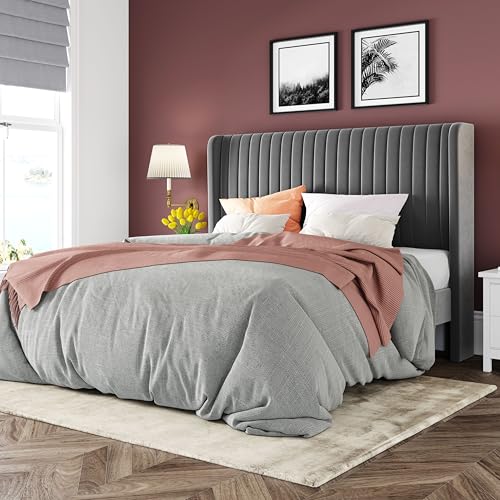 Allewie Full Size Velvet Upholstered Platform Bed |
9.1/10 | Buy |
| Best Premium |
 Ball & Cast Queen Channel Tufted Upholstered |
8.9/10 | Buy |
 SHA CERLIN Full Upholstered Platform Bed |
8.3/10 | Buy |
LIFEMENT Classic Wood Platform Bed, Queen
Built with solid rubber wood, this low-profile platform bed combines a minimalist silhouette with reinforced slats that do not require a box spring. It serves well for modern bedrooms needing clean lines, integrated clearance for storage, and quiet structural support.
Pros
- Solid rubber wood frame resists warping
- Adhesive-lined slats minimize squeaks and shifting
- Compatible with mattresses without a box spring
- Elevated profile offers accessible storage space
Cons
- Solid wood headboard provides no padded back support
- Low 33.4-inch headboard may sit below taller mattresses
Allewie Full Size Velvet Upholstered Platform Bed
The Allewie Full Size Velvet Upholstered Platform Bed features a vertical channel tufted wingback headboard, an 800-pound stated weight capacity, and an integrated wooden slat system that eliminates the need for a box spring. Offering 8 inches of under-bed clearance and sound-dampening foam, it is a practical, stylish foundation for urban apartments and guest bedrooms.
Pros
- Integrated velcro wooden slats eliminate the added cost and height of a traditional box spring.
- Manufacturer-stated 800-pound static load capacity backed by metal framing and center support legs.
- Practical 8-inch under-bed vertical clearance accommodates shallow storage bins.
- Integrated sound-absorbing foam strips and foot pads help reduce friction noise during movement.
Cons
- Specific numerical slat spacing is not detailed in specifications, so owners of specialty foam mattresses must manually verify gap compliance.
- The 47-inch headboard height may be partially covered if paired with mattresses thicker than the recommended 12 inches.
- Velvet upholstery requires regular light vacuuming or lint rolling to prevent dust and lint buildup.
Ball & Cast Queen Channel Tufted Upholstered
The Ball & Cast Queen platform bed delivers a contemporary, grounded floor-bed aesthetic wrapped in plush channel-tufted chenille upholstery over an MDF and particleboard core. Featuring an integrated wood slat system that eliminates the need for a box spring, it is an appealing option for master bedrooms and modern apartments prioritizing soft edges and low-profile comfort over under-bed storage.
Pros
- Thick, padded chenille upholstery provides a soft, channel-tufted tactile feel across all sides of the frame
- Integrated wood slats provide dependable mattress support without requiring a separate box spring
- Grounded floor design offers a modern, cozy silhouette that prevents items from rolling underneath
- Neutral beige-grey fabric tone easily coordinates with contemporary, minimalist, or transitional bedroom decor
Cons
- Grounded base offers zero under-bed vertical clearance, eliminating storage bin space and robot vacuum passage
- Core structure is engineered MDF and particleboard rather than solid hardwood timber
- Low 23.5-inch overall profile may be uncomfortable for sleepers with mobility challenges who prefer a taller bed height
SHA CERLIN Full Upholstered Platform Bed
This upholstered platform bed features channel-tufted velvet upholstery paired with an adjustable headboard that fits mattresses up to 14 inches thick. Its wooden slat system removes the need for a box spring while integrated velcro strips help prevent noise.
Pros
- Headboard height adjusts for multiple mattress profiles
- Velcro-lined slats provide quiet, squeak-free support
- Does not require a separate box spring
- Includes all necessary assembly tools and hardware
Cons
- Underbed clearance is relatively low at 7.9 inches
- Requires complete self-assembly before use
Platform Bed vs Regular Bed: Structural Mechanics and Support
| Feature | Platform Bed | Regular Bed (with Box Spring) |
|---|---|---|
| Foundation Requirement | None (integrated slats/deck) | Box spring or foundation required |
| Total Bed Height | Lower profile | Higher profile |
| Under-Bed Clearance | Often limited by slat height | More space for storage bins |
| Mattress Support | Direct slat support | Indirect via box spring |
| Weight Distribution | Depends on slat spacing | Evenly distributed by box spring |
Platform beds eliminate the need for a separate box spring by incorporating a support system directly into the frame.
- This system usually consists of wooden slats, a solid wood deck, or a metal grid.
- The slats are spaced closely together, often less than 3 inches apart, to provide adequate support for modern mattresses.
- This close spacing is particularly important for memory foam and latex mattresses, which can sag if the gaps are too wide.
- Regular beds, on the other hand, rely on a box spring to provide this support.
- The box spring acts as a cushioning layer between the mattress and the frame, distributing weight evenly and adding height to the bed.
The structural integrity of a platform bed depends heavily on the quality of its slats and center support rails. High-quality platform frames use solid hardwood slats, such as rubberwood or oak, which are naturally strong and resistant to warping. These slats are often reinforced with sticky strips or velcro to prevent movement and squeaking.
In contrast, regular bed frames are often simpler in design, with a basic wooden or metal frame that holds the box spring. The box spring itself provides the primary support, so the frame does not need to be as structurally complex. However, this means that the total weight capacity of a regular bed is shared between the frame and the box spring, whereas a platform bed must support the full weight of the mattress and sleepers on its own.
Key Structural Differences to Check
- Check slat spacing on platform beds to ensure it is under 3 inches for foam mattresses.
- Verify the material of the slats; solid hardwood is more durable than particleboard.
- Look for center support rails and adjustable legs on platform beds for added stability.
- Confirm that regular bed frames are compatible with the specific box spring you plan to use.
- Measure the total height of the bed to ensure it fits your bedroom layout and preferences.
When evaluating structural support, it is essential to consider the type of mattress you will be using. Memory foam and latex mattresses are heavier and require more uniform support than traditional innerspring mattresses. A platform bed with closely spaced slats provides this uniform support, reducing the risk of sagging and extending the life of the mattress.
Regular beds with box springs may not provide the same level of support for heavy foam mattresses, potentially leading to premature wear. Therefore, if you are using a high-density foam mattress, a platform bed is often the better choice.
Height and Ergonomics
The height of the bed is a significant factor in both aesthetics and functionality. Platform beds typically have a lower profile because they do not require a box spring. This lower height can be beneficial for people who prefer a bed that is closer to the floor, as it can make getting in and out of bed easier.
It also creates a more grounded, modern look in the bedroom. Regular beds, with their box springs, are taller, which can be advantageous for people who prefer a higher sleeping position or who need extra under-bed storage space. The taller profile also makes it easier to see under the bed, which can be useful for cleaning or storing items.
However, the lower profile of a platform bed can limit under-bed storage. Because the slats are close to the floor, there may not be enough clearance to fit standard storage bins. This is a trade-off that buyers need to consider. If under-bed storage is a priority, a regular bed with a box spring may be the better option, as it provides more vertical space.
Alternatively, some platform beds are designed with raised legs to provide additional clearance, but this can affect the overall height and stability of the bed. It is important to measure the clearance under the bed before purchasing to ensure it meets your storage needs.
Mattress Warranty Compliance
Mattress manufacturers often have specific requirements for the foundation used to support their products. For memory foam and latex mattresses, many manufacturers require a solid or closely spaced slat foundation to maintain the warranty. If the slats are spaced too far apart, the mattress may sag, which can void the warranty. Platform beds are designed to meet these requirements, with slat spacing typically under 3 inches.
Regular beds with box springs may not meet these requirements, as the box spring provides a different type of support. Therefore, it is crucial to check the mattress manufacturer’s warranty guidelines before choosing a bed frame. If you are using a foam mattress, a platform bed is often the safer choice to ensure warranty compliance.

For innerspring mattresses, the foundation requirements are less strict. These mattresses are designed to work with box springs, which provide the necessary support and ventilation. A platform bed can still be used with an innerspring mattress, but it may not be necessary.
The box spring helps to absorb shock and provide a more traditional sleeping feel. If you prefer the feel of a box spring, a regular bed may be the better option. However, if you are looking for a more modern, low-profile setup, a platform bed can work well with an innerspring mattress, provided the slat spacing is appropriate.
Storage and Clearance
Under-bed storage is a key consideration for many buyers, especially in smaller bedrooms. Regular beds with box springs offer more vertical clearance, making it easier to fit storage bins, suitcases, or other items under the bed. This extra space can be a significant advantage for people who need to maximize their storage options.
Platform beds, with their lower profile, may not provide enough clearance for standard storage containers. However, some platform beds are designed with raised legs or integrated drawers to provide additional storage options. These features can help to offset the limited clearance under the slats.
If under-bed storage is a priority, it is important to measure the clearance under the bed before purchasing. Standard storage bins are typically 6 to 8 inches tall, so you need at least that much clearance to fit them comfortably. Some platform beds have a clearance of only 4 to 5 inches, which may not be enough for most storage containers.
In this case, you may need to use flatter storage options, such as vacuum bags or shallow bins. Alternatively, you can choose a platform bed with integrated drawers, which provide storage without relying on under-bed clearance. This can be a convenient option for people who want to keep their bedroom clutter-free.
Assembly and Maintenance
Assembly is another factor to consider when choosing between a platform bed and a regular bed. Platform beds often have more complex assembly processes because they include slats and other support components. These components need to be installed correctly to ensure the bed is stable and quiet.
Regular beds, with their simpler frames, are often easier to assemble. However, the box spring adds an extra step, as it needs to be placed on the frame. Overall, the assembly time for both types of beds is similar, but the platform bed may require more attention to detail.
Maintenance is also an important consideration. Platform beds with wooden slats may require periodic tightening of screws and bolts to prevent squeaking. The slats themselves can also wear over time, especially if they are made from lower-quality materials. Regular beds with box springs may require less maintenance, as the box spring provides a more stable foundation. However, the box spring can also wear out over time, leading to a loss of support. It is important to choose a high-quality bed frame and foundation to ensure long-term durability and comfort.
Choosing the Right Bed for Your Needs
Choosing between a platform bed and a regular bed ultimately depends on your specific needs and preferences. If you are using a memory foam or latex mattress, a platform bed is often the better choice due to its closer slat spacing and direct support. If you prefer a higher sleeping position or need more under-bed storage, a regular bed with a box spring may be more suitable.
Consider the height of the bed, the type of mattress you are using, and your storage needs when making your decision. By understanding the structural differences and implications of each bed type, you can choose the right frame for your bedroom and ensure a comfortable, long-lasting sleep experience.
For those interested in specific dimensions, understanding standard bed sizes is crucial for ensuring your new frame fits your mattress and room. You can explore more details in our guide to standard bed sizes and dimensions.
This resource helps clarify the exact measurements for Twin, Full, Queen, and King sizes, which is essential when comparing platform and regular bed frames. Additionally, if you are considering a King size bed, it is worth noting that King beds are wider than Queen beds, which can affect the overall footprint and storage clearance in your bedroom.
In conclusion, the choice between a platform bed and a regular bed comes down to your mattress type, storage needs, and aesthetic preferences. Platform beds offer a modern, low-profile look and direct mattress support, making them ideal for foam mattresses. Regular beds with box springs provide a higher sleeping position and more under-bed storage, which can be beneficial for traditional innerspring mattresses. By carefully considering these factors, you can select the bed frame that best suits your lifestyle and ensures a comfortable, supportive sleep environment.
About the author
Noah Kaufman is a product-focused editor and writer with experience evaluating household equipment. His published furniture reviews include outdoor sofas, upholstered seating, and standing desks, often drawing on how products perform in everyday home settings.