
How Bed Bug Bites Look? Quick Answer
Learn how bed bug bites look, identifying patterns, swelling, and timing for November 2026. Detect infestations early with practical visual checks.
 By Nashia Baker
Updated October 24, 2026


Bed bug bites typically appear as red, itchy welts that often align in a straight line or a zigzag pattern on exposed skin. These reactions usually develop within 1 to 3 days after the insect feeds, though some individuals may not show signs for up to a week. Recognizing this specific visual progression helps distinguish bed bug bites from other common insect stings or skin conditions.
Understanding the physical appearance of these bites is the first step in confirming an infestation. While the marks themselves are a symptom, they serve as a critical alert to inspect your sleeping environment. This guide explains the visual characteristics, typical locations, and the necessary actions to take when you notice these signs on your skin or bedding.
| Award | Product | FCH Score About FCH ScoreThe FCH Score is our own rating from 0 to 10, based on performance, design and build, ease of use, and value. It reflects independent research and is never influenced by manufacturers, retailers, or affiliate commissions. Learn more › | |
|---|---|---|---|
| Best Overall |
Ortho Home Defense Max Bed Bug Trap 2-Pack
|
9.1/10 | Buy |
| Best Budget |
 Harris Bed Bug Traps (4-Pack) |
8.9/10 | Buy |
| Best Value |
 Raid Bed Bug Detector and Trap |
8.9/10 | Buy |
| Best Premium |
 EcoVenger Bed Bug Killer Spray 16 oz for Bed |
8.6/10 | Buy |
 GoneNaturally Scentless Bed Bug & Dust Mite Spray |
8.6/10 | Buy | |
 MaxGuard Bed Bug Traps (24-Pack) |
7.8/10 | Buy |
Ortho Home Defense Max Bed Bug Trap 2-Pack
The Ortho Home Defense Max Bed Bug Trap (2-Pack) is a specialized bedroom foundation accessory designed to detect and monitor bed bugs around bed frames, headboards, and mattress foundations. Operating without weight-bearing structural support, it tucks discreetly near bed legs or between a mattress and box spring for early pest detection in any bedroom setup.
Pros
- Low 0.88-inch profile fits easily near bed frame legs, behind headboards, or between a mattress and box spring
- Simple push-button attractant activation with a convenient peel-back viewing window for effortless monitoring
- Non-marring, lightweight design will not scratch wood flooring or scuff metal bed frames
- Universal placement compatibility across all bed frame styles, from platform beds to traditional box spring setups
Cons
- Designed strictly for detection and monitoring rather than full eradication, requiring supplemental treatment products for active infestations
- Two-pack quantity may be insufficient to cover all legs and perimeter points on large Queen or King frames without purchasing extra units
- Provides zero structural support for mattresses or foundations, functioning solely as a monitoring accessory
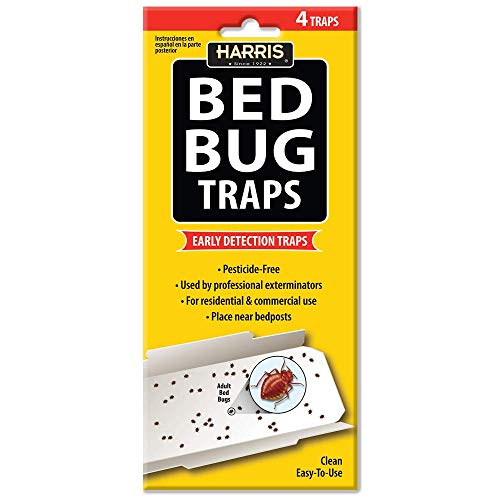
Harris Bed Bug Traps (4-Pack)
Designed to slide discreetly beneath platform beds, standard frames, and box spring foundations, these ultra-low-profile folding traps provide early pest detection without interfering with under-bed clearance. With a natural formulation and fast tab-lock setup, they offer an essential monitoring safeguard for apartment dwellers, renters, and homeowners.
Pros
- Ultra-slim 0.25-inch folded height fits under virtually any bed frame rail or low-clearance platform
- Pesticide-free natural formulation is practical for everyday bedroom and furniture use
- Simple fold-and-tab design requires no tools, tape, or complex assembly
- Four included traps allow coverage at multiple critical bed legs or under-frame locations
Cons
- Serves strictly as an early detection and monitoring device rather than a complete pest extermination solution
- Lightweight paperboard construction can be crushed if kicked or struck directly by heavy sliding under-bed storage totes
- Requires routine manual visual inspection to check for captured pests
Raid Bed Bug Detector and Trap
Designed for early pest monitoring around bed frames, headboards, and mattress foundations, this 8-count disposable trap set provides a clear viewing window for easy inspection without requiring frame assembly. It offers a practical detection solution for apartment dwellers, travelers, and homeowners looking to safeguard their bedroom investment.
Pros
- Compact profile fits easily underneath low-clearance platform beds and behind headboards
- See-through window allows quick visual checks without opening the trap or handling pests
- Works around any bed frame type, slat system, or box spring foundation without modification
- Pack of 8 provides multi-point monitoring around corner posts and center support legs
- Fully disposable design ensures clean and effortless removal after use
Cons
- Functions solely as an early detection and monitoring device rather than an active extermination treatment
- Requires deliberate positioning on clean floor surfaces away from heavy under-bed dust buildup for best visibility
- May need periodic replacement if used in high-traffic bedrooms or during extended travel cycles
EcoVenger Bed Bug Killer Spray 16 oz for Bed
EcoVenger Bed Bug Killer is a plant-based botanical spray formulated to eliminate bed bugs, nymphs, and eggs across bed frames, mattresses, and box springs without toxic chemicals. Dermatologically safe and child- and pet-friendly, it provides two weeks of residual protection to help homeowners and renters safeguard their bedroom foundations.
Pros
- University-reviewed botanical formula delivering 100 percent kill efficacy against adult bed bugs, nymphs, and eggs
- USDA Bio-Certified and dermatologically safe for direct application on mattresses, box springs, and upholstered headboards
- Child- and pet-friendly formulation avoids harsh synthetic chemical pesticides and toxic residues
- Extended dry residual barrier provides up to two weeks of continuous insect defense along bed rails and floor perimeters
Cons
- Trigger spray nozzle features delicate components that may occasionally require seller replacement if damaged in transit
- Natural active botanical ingredients carry a distinct cedarwood and herbal scent that requires brief room ventilation after use
- Compact 16-ounce bottle size may require multiple units when treating an entire master bedroom suite or multiple guest beds
GoneNaturally Scentless Bed Bug & Dust Mite Spray
A scentless, plant-based bedroom maintenance spray formulated with soybean oil to eliminate bed bugs, eggs, and dust mites in headboard joints, mattress seams, and box spring corners. Ideal for homeowners, renters, and travelers who need fabric-safe, non-staining protection for bedroom furniture and upholstery without harsh chemical odors.
Pros
- Scentless and non-staining formulation leaves no oily residue or odors on upholstered headboards and linens
- Targets bed bugs at all life stages including eggs, nymphs, and adults on contact
- Dries quickly so beds, box springs, and treated furniture can be used the same day
- Soybean-oil-based formula is safe around kids and pets when used as directed
- Dual-action protection eliminates dust mites for improved bedroom allergen management
Cons
- Requires disciplined daily application for 14 or more days to fully break the egg-hatching cycle
- Compact 16-ounce bottle may require multiple units for comprehensive multi-room or whole-house treatments
- Must be paired with physical routines like hot washing bedding and thorough vacuuming for complete eradication
MaxGuard Bed Bug Traps (24-Pack)
MaxGuard Bed Bug Traps provide a non-toxic detection and barrier system designed for placement around bed frame legs and bedroom furniture posts. Featuring an adhesive formula with a timed-release attractant, this 24-pack accessory helps apartment dwellers and homeowners monitor bed foundations without requiring chemicals or insecticides.
Pros
- Chemical-free, 100 percent non-toxic adhesive formula safe for use around master bedrooms, youth rooms, and guest beds.
- Generous 24-pack supply easily covers multiple bed frame legs, intermediate center support posts, and bedroom furniture.
- Compact 7.5 by 2.5 inch footprint fits neatly beneath low-clearance bed frames and beside furniture feet.
- Long-lasting attractant provides continuous monitoring for up to six months without frequent replacement.
Cons
- Serves solely as a monitoring and interception accessory; does not provide structural mattress support or replace a bed frame foundation.
- Does not prevent pests from dropping onto beds from ceilings or walls if frames are positioned directly flush against baseboards.
- Passive detection requires time to gather visual evidence and cannot eradicate existing infestations inside mattresses independently.
Identifying the Visual Signs of Bed Bug Bites
The primary visual indicator of a bed bug bite is a raised, red bump that resembles a mosquito bite but tends to be more swollen and persistent. Unlike mosquito bites, which often have a single distinct puncture mark in the center, bed bug bites frequently appear without a visible puncture point. The surrounding skin may become irritated and spread redness, creating a larger area of inflammation than the initial bite site.
Timing plays a significant role in how these bites evolve. The reaction is an allergic response to the saliva injected during feeding, meaning the severity varies by individual. Some people experience immediate itching, while others may not notice the marks until the next morning. If you wake up with new, unexplained welts on your arms, neck, or face, it is a strong indicator to investigate your mattress and bed frame thoroughly.
Typical Bite Patterns and Locations
Bed bugs are nocturnal feeders that prefer exposed skin, which is why bites are most common on the face, neck, arms, and hands. A hallmark of bed bug infestations is the “breakfast, lunch, and dinner” pattern, where three or more bites appear in a straight or curved line. This happens because the bug is disturbed during feeding and moves slightly to find a new spot.
Unlike fleas, which typically target the ankles and lower legs, bed bugs can bite anywhere the skin is exposed. You might find clusters of bites on your shoulders or the backs of your hands if you sleep with your arms outside the covers. The irregular, non-random distribution of these marks is a key diagnostic feature that sets them apart from random mosquito landings.
Distinguishing Bed Bug Bites from Other Insects
It is common to confuse bed bug bites with flea or mosquito bites, but there are distinct differences. Flea bites are usually smaller, intensely itchy, and concentrated around the ankles and calves. They often appear in pairs or small groups rather than long lines. Mosquito bites, on the other hand, are typically isolated and have a clear puncture point in the center of the redness.
Bed bug bites tend to be flatter and more widespread in their redness. The swelling is often more pronounced, and the itching may be less intense than flea bites but lasts longer. If you see a linear arrangement of bites on your upper body, it is far more likely to be bed bugs than fleas or mosquitoes. This distinction is crucial for choosing the right treatment method for your home.
Physical Reactions and Skin Sensitivity
Not everyone reacts to bed bug bites in the same way. Some individuals have a strong immune response, leading to large, blistering welts that can take days to heal. Others may have a mild reaction with only slight redness. In rare cases, people can develop a severe allergic reaction, resulting in hives or widespread swelling. This variability makes it difficult to rely on bite severity alone for diagnosis.
Children and the elderly may experience more pronounced reactions due to thinner skin or different immune systems. If you share a bed with someone who shows no signs of bites, it does not rule out an infestation. The presence of bites on at least one person in the household is enough to warrant a thorough inspection of the bedroom and any nearby furniture.
When to Seek Medical Attention
Bed bug bites are generally harmless but can lead to secondary infections if scratched excessively, allowing bacteria to enter broken skin and cause pain, warmth, and increased swelling.
- Healthcare providers may recommend topical antibiotics or other treatments when secondary infections occur due to excessive scratching.
- It is important to seek medical advice if you experience signs of a severe allergic reaction from the bites.
- Signs of a severe allergic reaction include difficulty breathing or swelling of the throat, requiring immediate attention.
Medical attention is not usually required for standard bed bug bites, but it is essential for managing severe skin reactions. Do not ignore persistent itching or spreading redness, as these can indicate an underlying infection. Keeping your nails short and using over-the-counter anti-itch creams can help manage symptoms while you address the source of the infestation.
Key Visual Indicators Checklist
Use this checklist to assess whether the marks on your skin are likely bed bug bites:
- Bites appear in a straight line or zigzag pattern
- Redness is widespread with no visible puncture mark
- Swelling is more pronounced than typical mosquito bites
- Marks are located on exposed skin like arms and neck
- New bites appear consistently every morning
- Itching persists for several days after the bite
Confirming the Infestation in Your Bed
Seeing bites is only half the confirmation. You must inspect the bed frame, mattress seams, and headboard for live bugs or shed skins. Bed bugs are small, flat, and reddish-brown, making them hard to spot in dark crevices. Use a flashlight to check the stitching of the mattress and the joints of the bed frame.
Look for small black or rust-colored spots, which are bed bug excrement. You may also find tiny, translucent eggshells near the seams. If you find these signs, the infestation is confirmed regardless of whether you see live insects. This step is critical because bed bugs can hide in small numbers without leaving many visible traces.
Immediate Steps After Detection
Once you suspect an infestation, avoid moving the mattress to other rooms, as this can spread the bugs. Instead, isolate the bed by moving it away from the walls and using bed bug interceptors under the legs. These devices trap crawling insects and help monitor the population. Vacuum the mattress and frame thoroughly, paying close attention to seams and crevices.
Wash all bedding in hot water and dry on high heat to kill any eggs or nymphs. Consider using a mattress encasement to trap any remaining bugs inside and prevent new ones from entering. If the infestation is widespread, professional pest control may be necessary to ensure complete elimination.
Preventing Future Bites and Infestations
Prevention is the most effective way to avoid bed bug bites. Regularly inspect your bed and furniture for signs of infestation, especially after travel. Use mattress and box spring encasements to create a barrier against bugs. Keep your bedroom clutter-free, as bed bugs thrive in areas with many hiding spots.
When bringing second-hand furniture into your home, inspect it thoroughly before bringing it inside. Treat luggage with a quick spray or check it for signs of bugs after trips. By staying vigilant and maintaining a clean environment, you can significantly reduce the risk of a bed bug infestation.
Practical Detection and Monitoring Tools
Monitoring tools are essential for early detection and confirming the presence of bed bugs. Bed bug interceptors are placed under the legs of the bed and furniture to catch crawling insects. These traps are simple to use and can provide definitive proof of an infestation. They are particularly useful for monitoring the effectiveness of treatment over time.
In addition to interceptors, consider using a bed bug detector or trap that uses an attractant to lure bugs into a sticky surface. These devices can be placed near the bed or in other areas where you suspect activity. Regular monitoring helps you catch infestations early, when they are easier and less expensive to treat. For more detailed information on maintaining a healthy sleep environment, you can refer to our bed size and frame guide.
Understanding the Bed Bug Life Cycle
Bed bugs go through several life stages, from egg to adult, which makes them difficult to eliminate. Eggs are tiny and often hidden in seams, making them hard to spot. Nymphs, the immature stage, are smaller and lighter in color than adults. They feed and molt several times before reaching adulthood, a process that can take several weeks.
Understanding the life cycle is important for choosing the right treatment. Some products kill only adult bugs, while others are effective against eggs and nymphs. A comprehensive treatment plan should address all life stages to prevent re-infestation. This is why professional pest control often uses a combination of methods, including heat treatment and insecticides.
Long-Term Management and Maintenance
After treating an infestation, ongoing maintenance is crucial to prevent recurrence. Continue using bed bug interceptors under your bed legs to monitor for any remaining activity. Regularly inspect your mattress and frame for signs of new bites or live bugs. Keep your bedroom clean and free of clutter to reduce hiding spots.
Consider using a mattress encasement to provide an additional layer of protection. This barrier can trap any remaining bugs inside and prevent new ones from entering. By staying proactive and maintaining a clean environment, you can ensure that your bed remains a safe and comfortable place to sleep. For more tips on bedroom organization, see our single vs. twin bed comparison.
Final Thoughts on Bite Identification
Identifying bed bug bites is a critical first step in managing an infestation. By recognizing the visual signs, such as linear patterns and widespread redness, you can take prompt action to protect your health and home. Remember that bites are a symptom, not the cause, and a thorough inspection of your bed and furniture is essential for confirmation.
Stay vigilant, use monitoring tools, and maintain a clean environment to prevent future infestations. If you are unsure about the severity of the problem, consult a professional pest control service. Early detection and proper treatment are key to eliminating bed bugs and restoring peace of mind in your bedroom.
About the author
Nashia Baker is a home and lifestyle journalist who covers furniture, décor, and everyday living. Her work includes hands-on seating reviews and product comparisons, with particular attention to comfort, materials, and how furniture fits into real homes.