
How to Arrange Reclining Sofa and Loveseat: Quick Guide
Learn practical layout strategies for positioning a reclining sofa and loveseat to optimize traffic flow, viewing angles, and comfort in November 2026.
 By Nashia Baker
Updated November 23, 2026


Arranging a reclining sofa and loveseat requires prioritizing rear clearance for the reclining mechanism and maintaining a clear 36-inch walking path between the pieces and surrounding furniture. Unlike standard static seating, these units expand significantly in depth when activated, often extending 14 to 20 inches beyond their original footprint.
This expansion dictates the spatial geometry of the room, forcing a layout that accommodates both the seated and fully reclined positions without blocking doorways, windows, or other seating. Proper placement ensures that the mechanical action of the recliner does not collide with adjacent furniture, walls, or decorative elements like rugs and side tables.
Many homeowners struggle with this specific dynamic because they measure only the collapsed dimensions of the furniture. The result is a cramped living space where the footrest hits a coffee table or the backrest presses against a wall-mounted shelf. By understanding the mechanical requirements of reclining sofa and loveseat configurations, you can create a functional layout that balances aesthetic appeal with physical usability.
This approach involves calculating the total depth of the reclined position, ensuring adequate circulation space, and aligning the pieces for optimal viewing angles if a television is present. The goal is a harmonious arrangement where comfort and movement coexist without compromise.
| Award | Product | FCH Score About FCH ScoreThe FCH Score is our own rating from 0 to 10, based on performance, design and build, ease of use, and value. It reflects independent research and is never influenced by manufacturers, retailers, or affiliate commissions. Learn more › | |
|---|---|---|---|
| Best Overall |
CANMOV Manual Recliner Sofa Set
|
8.9/10 | Buy |
| Best Premium |
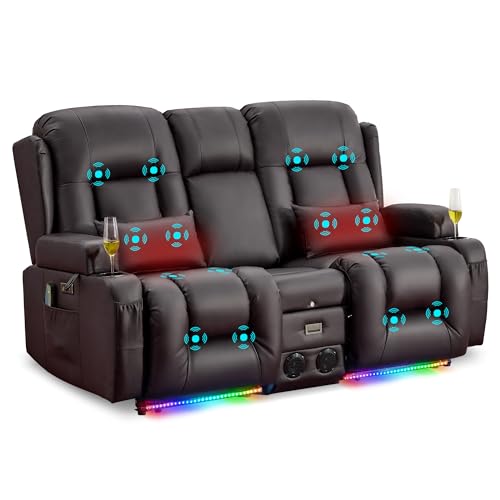 URRED Power Loveseat Recliner Sofa with Massage |
8.9/10 | Buy |
| Best Value |
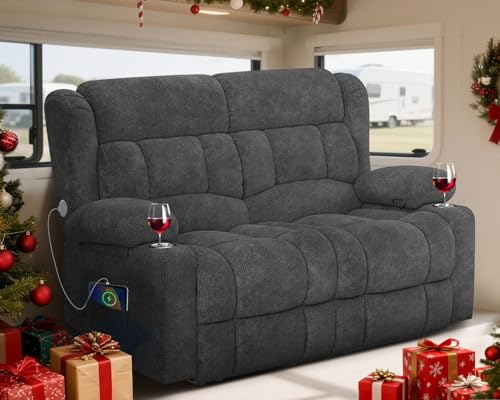 MisUMis RV Loveseat Recliner Sofa |
8.6/10 | Buy |
| Best Budget |
 EBELLO Faux Leather Manual Loveseat Recliner |
8.4/10 | Buy |
 Loveseat Recliner Couch and 3 Seat Reclining Sofa |
8.0/10 | Buy | |
 Korser Recliner Sofa, Reclining Loveseat |
7.8/10 | Buy |
If this topic is part of a bigger decision, reclining sofa under 400 is a useful related read.
Calculating Space for Reclining Furniture Layouts
The fundamental challenge in placing these pieces is accounting for the hidden depth added by the reclining mechanism. When a sofa reclines, the seat extends forward and the backrest tilts backward, increasing the overall footprint. For a standard manual recliner, this extension can range from 14 to 18 inches, while power recliners with extended footrests may reach up to 20 inches or more.
You must add this extension to the collapsed depth of the sofa to determine the maximum depth required for the layout. If the collapsed depth is 37 inches, the reclined depth becomes approximately 55 to 57 inches. This metric is critical for determining where the sofa can be placed relative to walls and other furniture.
| Component | Collapsed Depth | Reclined Extension | Total Reclined Depth |
|---|---|---|---|
| Standard Manual Recliner | 35-38 inches | 14-16 inches | 49-54 inches |
| Power Recliner with Footrest | 36-39 inches | 16-20 inches | 52-59 inches |
| Wall-Hugger Recliner | 34-37 inches | 12-15 inches | 46-52 inches |
Once you have the total reclined depth, you can map the furniture’s path within the room. A common mistake is placing the sofa too close to a coffee table. If the coffee table is positioned 18 inches from the front edge of the sofa, a recliner extending 16 inches will leave only 2 inches of clearance, which is insufficient for safe and comfortable use. The recommended clearance between the front of a reclined sofa and any forward-facing furniture, such as a coffee table or TV stand, is at least 24 to 30 inches.
This space allows users to stand up, walk past, or use the footrest without obstruction. Similarly, the distance from the back of the sofa to the wall should be considered. Standard recliners often require 10 to 15 inches of space behind the backrest to fully recline, whereas wall-hugger models are designed to require only 1 to 2 inches. Knowing which type of mechanism you have is essential for accurate planning.
Another critical factor is the width of the walking paths. In a living room, the main circulation route should be at least 36 inches wide to allow two people to pass each other comfortably. If the reclining sofa and loveseat are placed in a U-shape or facing configuration, ensure that the gap between the armrests is sufficient for this clearance. For example, if you place a 60-inch sofa and a 56-inch loveseat facing each other, the total width of the furniture is 116 inches.
If the room is 120 inches wide, there is only 4 inches of space on the sides, which is unusable for circulation. The furniture must be positioned to leave at least 36 inches of open floor space on the primary walking paths. This often means placing the pieces against walls or in corners rather than floating them in the center of the room, unless the room is significantly larger.
Key Measurements for Recliner Placement
To ensure your layout works, verify the following dimensions before moving heavy furniture. These measurements account for the mechanical expansion of the reclining units and standard ergonomic clearances for safe movement.
- Measure the total depth of the sofa in its fully reclined position, not just the collapsed state.
- Ensure at least 24 inches of clearance between the extended footrest and any coffee table.
- Maintain a 36-inch wide walking path between the sofa, loveseat, and other furniture.
- Check the wall clearance behind the backrest, which varies by mechanism type.
- Verify that the recliner does not block doorways, windows, or ventilation grates when extended.
Optimizing Viewing Angles and Traffic Flow
When arranging a reclining sofa and loveseat, the position of the television or focal point is crucial. If the sofa is the primary viewing seat, it should be centered relative to the screen. However, if the loveseat is placed at an angle to create a conversational grouping, the viewing angle for the loveseat users may be suboptimal. This is often an acceptable trade-off for social comfort, but it should be intentional.
Ensure that the armrests of the sofa and loveseat do not create a visual barrier that obstructs the view for anyone sitting in the adjacent seats. If the pieces are placed in an L-shape, the corner unit often provides the best viewing angle, while the chaise or extended section is used for lounging. In this configuration, the traffic flow should bypass the open side of the L, keeping the inner corner clear for easy access to the center of the room.
Traffic flow is not just about width; it is also about the path of movement. Identify the primary entry point to the room and the main exit points, such as the kitchen or hallway. The furniture layout should not force users to take a wide detour to move through the space. If the reclining sofa is placed near a doorway, ensure that the reclining motion does not swing the footrest into the door’s path.
This is a common issue in smaller rooms where space is tight. You may need to rotate the sofa 90 degrees or use a wall-hugger model to solve this conflict. The goal is a layout where the natural flow of movement is uninterrupted by the mechanical actions of the furniture. Users should be able to walk from the entryway to the back of the room without stepping over a rug, around a blocked path, or through a narrow gap between a recliner and a wall.
Strategic Placement for Small and Medium Rooms
In smaller living rooms, the challenge is to maximize seating while preserving floor space.
- A common strategy is to place the reclining sofa against the longest wall and the loveseat perpendicular to it.
- This arrangement uses the corners of the room, leaving the center open for circulation.
- However, you must ensure that the corner where the two pieces meet does not become a dead end.
- The gap between the armrests should be wide enough to allow someone to sit down and stand up.
- If the room is rectangular, placing the sofa on the short wall and the loveseat on the opposite short wall can create a symmetrical look.
- To balance this, use area rugs to define the seating zone and keep the perimeter clear for walking.
- In medium-sized rooms, you have more flexibility to float the furniture slightly off the walls, but you must still respect the standard clearance rule for traffic paths.
- Floating the furniture can make the room feel larger, but it also reduces the available floor space for movement.
- Weigh the aesthetic benefit against the functional loss of circulation space.
Another consideration for small spaces is the use of multifunctional furniture. Some reclining sofas come with storage compartments or fold-out tables that can replace a coffee table. If you use a sofa with a built-in console, you may not need a separate coffee table, which frees up floor space. This is particularly useful in rooms where every inch counts. However, ensure that the built-in console does not obstruct the reclining mechanism. The console should be positioned so that it does not interfere with the footrest extension.
If the console is in the center of the sofa, it may limit the reclining range of the middle seats. In such cases, it is better to place the reclining sofa against a wall and use a separate, slim-profile coffee table that can be moved aside when the sofa is in use. This flexibility allows you to adapt the layout to different activities, from watching movies to hosting guests. The key is to choose furniture that complements the room’s size and function, rather than forcing a large piece into a small space.
Managing Rug and Decorative Element Clearance
Rugs are essential for defining a seating area, but they must be sized correctly to accommodate the reclining motion. The front legs of the sofa and loveseat should sit on the rug, while the back legs can be off the rug. This anchors the furniture and prevents it from sliding when the recliner is activated. However, the rug must be large enough to cover the entire footprint of the furniture in its reclined position. If the rug is too small, the extended footrest may hang off the edge, creating a tripping hazard and looking unbalanced.
Measure the rug to ensure it extends at least 12 to 18 inches beyond the front of the reclined sofa. This provides a visual buffer and ensures that the rug does not look cramped. Additionally, ensure that the rug is non-slip or has a rug pad to prevent it from shifting under the weight of the furniture. A shifting rug can cause the sofa to move, which is dangerous for reclining mechanisms that rely on stable support.
Decorative elements such as side tables, floor lamps, and plants must also be positioned with clearance in mind. A side table placed next to the armrest of the reclining sofa should be at least 12 inches away from the armrest to allow easy access to the reclining handle. If the table is too close, users may bump into it when reaching for the handle or when the armrest moves. Floor lamps should be placed behind the sofa or in a corner where they do not obstruct the reclining path. Ensure that the lamp base is stable and that the cord is routed safely away from the footrest area.
Plants and other decorative items should be kept off the floor in front of the recliner to avoid being knocked over by the extending footrest. By carefully planning the placement of these elements, you create a cohesive and functional space that looks intentional and feels comfortable. The arrangement should support the user’s activities without creating obstacles or hazards. This attention to detail is what separates a well-planned living room from a cluttered and inconvenient one.
Common Layout Mistakes to Avoid
One of the most common mistakes is ignoring the reclining extension when measuring the room. Many people measure the collapsed dimensions of the sofa and assume that will be the only space needed. This leads to a layout where the recliner hits the coffee table or wall when extended. To avoid this, always measure the fully reclined depth and add it to your floor plan. Another mistake is placing the sofa too close to the wall, especially if it is not a wall-hugger model. Standard recliners need 10 to 15 inches of space behind them to recline fully. If you place it flush against the wall, the backrest will not tilt backward, rendering the reclining function useless.
Check the manufacturer’s specifications for the required wall clearance before positioning the sofa. A third mistake is blocking traffic paths with the furniture. If the gap between the sofa and loveseat is less than the recommended width, it becomes a bottleneck that forces users to step over or around the furniture. This is inconvenient and can be unsafe, especially in a home with children or elderly residents. Ensure that the main walking paths are clear and wide enough for comfortable movement. By avoiding these common errors, you can create a layout that is both functional and aesthetically pleasing.
Finally, do not neglect the aesthetic balance of the room. While functionality is paramount, the arrangement should also look harmonious. Avoid placing the sofa and loveseat in a way that creates an awkward void in the center of the room or leaves one side of the room empty. Use the furniture to define a cohesive seating area, and balance it with decorative elements like rugs, lighting, and art.
The goal is a space that feels inviting and comfortable, where the reclining mechanism is an integral part of the design rather than an afterthought. By considering both the mechanical requirements and the aesthetic goals, you can arrange your reclining sofa and loveseat in a way that maximizes comfort, functionality, and style. This thoughtful approach ensures that your living room is a place where you can relax and enjoy your time, without worrying about cramped spaces or obstructed movement.
For more insights on selecting the right furniture for your space, you might find our guide on space-saving sectional options helpful, as similar principles of clearance and layout apply to modular seating. Understanding how different furniture types interact with your room’s dimensions is key to a successful arrangement.
Ultimately, the best arrangement is one that works for your specific room and lifestyle. Take the time to measure, plan, and test different configurations before committing to a final layout. Use painter’s tape to mark the footprint of the furniture on the floor, including the reclined position, to visualize how it will fit.
This simple step can save you from costly mistakes and ensure that your reclining sofa and loveseat are placed in the most functional and comfortable positions. By following these guidelines, you can create a living room that is both beautiful and practical, where the reclining mechanism enhances your comfort rather than complicating your space.
About the author
Nashia Baker is a home and lifestyle journalist who covers furniture, décor, and everyday living. Her work includes hands-on seating reviews and product comparisons, with particular attention to comfort, materials, and how furniture fits into real homes.