
Deck vs Raised Patio: Facts and Tips
Compare deck vs raised patio options for uneven ground. Learn about WPC durability, modular layouts, and maintenance tips for November 2026.
 By Zoe Sessums
Updated November 8, 2026


Choosing between a traditional built deck and a modular raised patio platform comes down to permanence versus flexibility.
- A permanent deck requires significant excavation, framing, and fastening, while a raised patio system offers a freestanding, tool-free solution.
- The raised patio system levels uneven ground without concrete, providing a stable, dry surface for outdoor furniture or a campsite base.
- A modular deck vs raised patio setup is often the more practical and cost-effective choice for immediate use without a contractor.
These platforms utilize wood-plastic composite (WPC) surfaces and steel frames to resist rot, splinters, and weather damage. They are ideal for homeowners dealing with sloped yards, gravel patches, or renters who cannot make permanent structural changes. The following guide details the material science, spatial planning, and maintenance differences to help you decide which option fits your outdoor living goals.
| Award | Product | FCH Score About FCH ScoreThe FCH Score is our own rating from 0 to 10, based on performance, design and build, ease of use, and value. It reflects independent research and is never influenced by manufacturers, retailers, or affiliate commissions. Learn more › | |
|---|---|---|---|
|
33" Decking Waterproof Wood Composite Platform
|
8.6/10 | Buy | |
 Patio Raised Deck Platform |
8.0/10 | Buy | |
 Patio Raised Deck Platform |
8.6/10 | Buy | |
| Best Value |
 Pre Built Floating Deck Platform |
9.1/10 | Buy |
 Adjustable Raised Deck Platform |
8.1/10 | Buy | |
| Best Premium |
 Adjustable Raised Deck Platform |
9.1/10 | Buy |
| Best Budget |
 Low Profile Patio Platform Deck Backyard Pre Built |
8.8/10 | Buy |
| Best Overall |
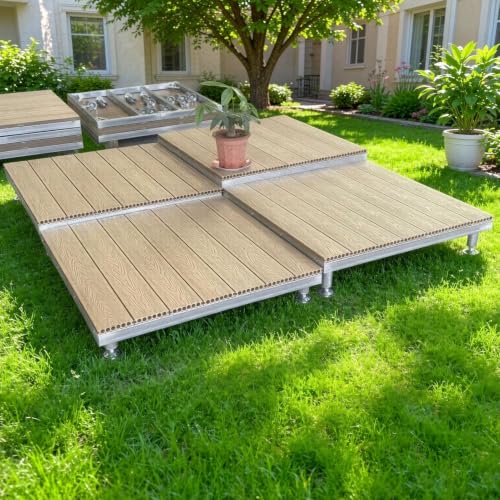 Pre Built Floating Deck Platform |
9.2/10 | Buy |
 Low Profile Patio Platform Deck Backyard Pre Built |
8.3/10 | Buy |
| Feature | Traditional Built Deck | Modular Raised Patio Platform |
|---|---|---|
| Installation Time | Days to Weeks | Minutes to Hours |
| Foundation | Poured Concrete or Posts | Adjustable Steel Pedestals |
| Surface Material | Natural Wood or Composite | WPC Composite Tiles |
| Maintenance | Oiling, Staining, Sealing | Low-Maintenance Wipe Down |
| Portability | Permanent Structure | Freestanding and Movable |
The primary distinction lies in the foundation and surface composition. Traditional decks rely on buried posts and joists, creating a rigid structure that is difficult to modify once installed. In contrast, raised patio platforms use independent steel pedestals with threaded leveling feet. This design allows the surface to float above the ground, accommodating soil shifts, root growth, or minor grading errors without structural compromise. The air gap beneath the tiles also promotes airflow, reducing the risk of trapped moisture that leads to wood rot in traditional lumber.
Wood-plastic composite (WPC) is the standard surface material for these modular systems. Unlike natural hardwoods that absorb water and expand, WPC binds wood fibers with plastic polymers, creating a dense, non-porous surface. This material resists splintering, insect damage, and UV fading without the need for annual staining or sealing. For homeowners in humid or coastal climates, this low-maintenance aspect is a significant advantage over traditional cedar or pressure-treated pine decks.
When evaluating the deck vs raised patio decision, consider your terrain. If your yard is relatively flat and you desire a large, permanent entertainment space, a built deck may offer better aesthetic continuity. However, for sloped backyards, gravel driveways, or small balconies, a modular platform is often the only viable option that provides a level, stable surface without extensive earthmoving.
Structural Integrity and Load Capacity
Stability is the most common concern with floating platforms. High-quality raised patio systems utilize welded galvanized steel frames to support the WPC tiles. The frame typically includes rectangular outer tubing, square cross supports, and thick round legs that distribute weight evenly. This metallurgy is critical for preventing rust and ensuring the structure does not warp under heavy loads.
Most modular platforms are rated to support uniform loads of approximately 300 kg (661 lbs) per square meter. This capacity is sufficient for standard patio furniture, outdoor dining sets, and multiple adults. However, it is not designed to support the weight of heavy vehicles, large hot tubs, or structural additions like pergolas unless specifically engineered for those loads. Always verify the manufacturer’s weight rating before placing heavy equipment on the surface.
The height adjustability of the support legs is another key structural feature. Many models offer ranges from 5.9 to 22.8 inches, allowing users to level the platform on uneven ground. The threaded leveling feet provide micro-adjustments, ensuring that adjacent tiles sit at the same height without gaps or wobbling. This precision is essential for creating a safe walking surface and preventing tripping hazards.
Spatial Planning and Modular Layouts
One of the greatest advantages of a raised patio is its modularity. Tiles are typically square, measuring 33 by 33 inches, and feature interlocking snap-fit connections. This allows you to start with a single tile and expand the layout as your budget or space requirements change. You can arrange tiles in a grid pattern to create a rectangular dining area or a square seating nook.
When planning your layout, consider the dimensions of your intended furniture. For a standard outdoor dining set, you will need enough tile area to accommodate the table and chairs with at least 36 inches of clearance for chair pushback. For a conversation area with a sectional sofa, ensure there is a 30-inch perimeter walkway for safe traffic flow. Measuring your space before purchasing tiles helps avoid gaps or overages.
Modular platforms are also ideal for renters or those who plan to move. Because they are freestanding and do not require permanent anchoring, they can be disassembled and relocated easily. This flexibility makes them a smart investment for temporary outdoor spaces, such as campsite bases, RV patios, or seasonal garden areas.
- Measure your available ground space accurately before ordering tiles.
- Ensure a minimum 36-inch clearance around dining tables for chair movement.
- Leave a 30-inch walkway perimeter for safe traffic flow.
- Check the height adjustability range to match your terrain slope.
- Verify the weight rating supports your intended furniture and loads.
Readers working through this often check how to build a patio deck with wood next.
Weather Resistance and Drainage Systems
Outdoor flooring must withstand rain, snow, and intense UV exposure. WPC surfaces are designed to be water-resistant, meaning they do not absorb moisture like natural wood. The strategic gaps between tiles allow rainwater to drain quickly, preventing standing water that can cause ice buildup in winter or algae growth in summer.
The raised design of these platforms also helps with drainage. By elevating the surface above the ground, water flows freely underneath the tiles rather than pooling on the surface. This is particularly useful in areas with poor natural drainage or compacted soil. The air gap also allows the ground underneath to dry, reducing the risk of mold or mildew developing in the substructure.
While WPC is durable, it is not immune to all weather conditions. In extreme freeze-thaw cycles, moisture trapped in the soil can expand and potentially shift the leveling feet. Regular inspection of the support legs is recommended to ensure they remain secure and level. In coastal areas, the galvanized steel frames provide additional protection against salt-air corrosion, extending the lifespan of the platform.
Maintenance and Cleaning Protocols
Maintaining a raised patio platform is significantly easier than caring for a traditional wood deck. WPC surfaces do not require sanding, staining, or sealing. Dirt, dust, and spills can be wiped away with a damp cloth or rinsed with a garden hose. For stubborn stains, a mild detergent and soft-bristle brush are sufficient to restore the surface without damaging the finish.
It is important to avoid using high-pressure washers on WPC tiles, as the force can strip the surface texture or force water into the interlocking joints. Regular sweeping or blowing of debris, such as leaves and twigs, helps prevent organic matter from decomposing on the surface and causing discoloration. In winter, removing snow with a plastic shovel prevents scratching the composite material.
For long-term durability, inspect the steel frames periodically for signs of rust or corrosion. If any rust is detected, clean it with a wire brush and apply a rust-inhibiting primer. Ensuring the leveling feet are tight and secure also contributes to the overall stability and longevity of the platform. This proactive maintenance is minimal compared to the annual upkeep required for natural wood decks.
Cost Considerations and Long-Term Value
The upfront cost of a modular raised patio is generally lower than that of a traditional built deck. You avoid expenses for concrete, lumber, labor, and permits. The total cost depends on the number of tiles required and the specific brand or model chosen. Prices for individual tiles typically range from the mid-$200s to the mid-$300s, making it easy to budget for a small to medium-sized outdoor space.
While the initial investment is lower, the long-term value of a modular platform lies in its flexibility and low maintenance. You can expand the layout over time, adding tiles as needed without the cost of a full renovation. The durable WPC surface and steel frame are designed to last for many years with proper care, offering a high return on investment for outdoor living spaces.
For homeowners who value convenience and adaptability, a raised patio platform is a practical choice. It provides a clean, elevated surface for outdoor activities without the commitment of permanent construction. Whether you are creating a cozy garden corner or a spacious dining area, these platforms offer a versatile and durable solution for modern outdoor living.
If you are looking for additional guidance on outdoor flooring, our guide to outdoor furniture and patio essentials offers more insights into creating a functional and stylish exterior space. Proper planning and material selection are key to ensuring your raised patio serves your needs for years to come.
For more on a connected point, our page on difference between patio porch and deck goes into it separately.
About the author
Zoe Sessums is a design writer and editor whose work spans home tours, furniture reviews, and interior design. She has written about sofas, accent chairs, and versatile home furnishings, bringing an eye for design and everyday usability to her coverage.