
How to Make a Patio Square: Key Facts
Learn how to make a patio square using pavers or concrete. Covers layout, leveling, and drainage tips for November 2026.
 By Zoe Sessums
Updated November 8, 2026


Creating a square patio involves precise layout, stable base preparation, and durable surface installation. The core method relies on string lines and a carpenter’s square to establish 90-degree corners before excavating and leveling the subgrade. Proper drainage and material selection determine the long-term stability of the structure. This guide outlines the practical steps to build a durable, level outdoor surface.
Whether using interlocking pavers or poured concrete, the geometry must be exact to prevent shifting and water pooling. Homeowners often struggle with maintaining squareness over large areas, but simple geometric checks solve this. Understanding the material properties and site conditions is essential for a successful build. The following sections detail the planning, execution, and finishing processes.
| Award | Product | FCH Score About FCH ScoreThe FCH Score is our own rating from 0 to 10, based on performance, design and build, ease of use, and value. It reflects independent research and is never influenced by manufacturers, retailers, or affiliate commissions. Learn more › | |
|---|---|---|---|
|
How to Build a 12 x 14 Hoop Greenhouse
|
7.8/10 | Buy | |
 Hardscaping: How to Use Structures, Pathways |
8.8/10 | Buy | |
| Best Value |
 Seeding Square Planting Tool |
9.1/10 | Buy |
 Black & Decker The Complete Outdoor Builder |
8.8/10 | Buy | |
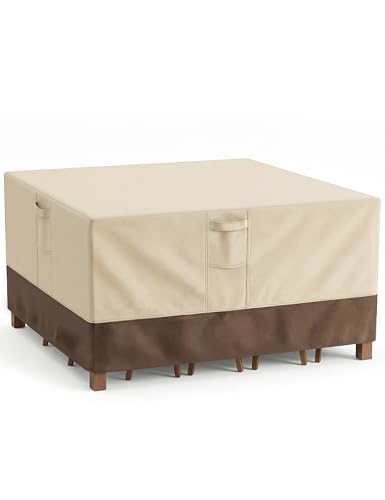 Vailge Patio Outdoor Furniture Covers |
8.8/10 | Buy | |
 Seed Spacing Templates Bundle for Raised Beds |
7.8/10 | Buy | |
| Best Overall |
 Attracting Wildlife to Your Backyard |
9.1/10 | Buy |
|
Vailge Patio Outdoor Furniture Covers
|
8.4/10 | Buy | |
| Best Premium |
Vailge Patio Outdoor Furniture Covers
|
8.6/10 | Buy |
 Seeding Square + Pokey Planter Bundle |
8.1/10 | Buy | |
| Best Budget |
 GARDENING: BACKYARD ORGANIC BOX GARDENING |
8.8/10 | Buy |
Planning and Layout for a Square Patio
Accurate measurement is the foundation of any square patio project. The 3-4-5 rule, derived from the Pythagorean theorem, is the most reliable method for establishing right angles without specialized laser equipment. By measuring three units along one side and four units along the adjacent side, the diagonal between the endpoints should measure exactly five units. If the diagonal does not match, the corner is not 90 degrees, and the layout must be adjusted before excavation begins.
Site selection significantly impacts the final usability and durability of the patio. Avoid low-lying areas where water naturally collects, as this leads to erosion and surface damage. The area should receive adequate sunlight for the intended use, whether for dining or lounging. Marking the perimeter with stakes and string lines allows for a visual check of the overall shape and dimensions before any ground is disturbed.
Consider the integration of the patio with existing landscape features. Pathways should connect logically to the main entrance or garden beds. The size of the square should accommodate the planned furniture layout, ensuring at least 36 inches of clearance for chair movement. This spatial planning prevents a cramped feel and ensures the patio remains functional for years.
Essential Tools and Material Preparation
Gathering the correct tools before starting prevents delays and ensures precision.
- A tape measure, carpenter’s square, string, and stakes are mandatory for layout.
- For excavation, a shovel and rake are standard, while a plate compactor is highly recommended for compacting the base material.
- The choice of surface material, such as concrete pavers or poured concrete, dictates the specific tools needed for installation and finishing.
Base materials typically consist of crushed stone or gravel, which provide drainage and stability. The depth of this base layer is critical; generally, 4 to 6 inches of compacted stone is required for paver installations. For concrete, a compacted soil base is sufficient, but it must be thoroughly leveled. Ensuring the base is free of organic matter like roots or grass prevents future settling and unevenness.
Protective gear is essential for safety during construction. Gloves, eye protection, and sturdy footwear protect against sharp materials and debris. When working with concrete, respiratory protection may be necessary due to dust. Proper preparation of the workspace, including clearing vegetation and marking utility lines, ensures a safe and efficient build process.
Establishing the Square Geometry
Once the perimeter is marked, verify the squareness using diagonal measurements. In a perfect square, the distance from one corner to the opposite corner should be identical for both diagonals. If the diagonals differ, the shape is a rectangle or parallelogram, not a square. Adjust the stakes until the diagonals match, ensuring all four corners are right angles. This step is crucial for aligning pavers or forming concrete edges correctly.
String lines should be taut and level to serve as guides for excavation and edging. Use a level to ensure the string is horizontal, preventing slopes that could affect drainage. The string lines define the outer boundary of the patio, and any deviation from these lines will result in an irregular shape. Maintaining tension in the strings is important, as slack can lead to inaccurate measurements and uneven edges.
For larger patios, dividing the area into smaller squares can help maintain accuracy. By checking the geometry of smaller sections, you can catch errors early before they compound across the entire surface. This method is particularly useful when using pavers, where small alignment errors at the start can lead to significant gaps at the edges. Consistent checking ensures a professional finish.
Excavation and Base Leveling
Excavation involves removing soil to the required depth for the base material. The depth depends on the surface material; pavers typically require more depth than concrete. Digging slightly deeper than necessary allows for precise leveling and compaction. The sides of the excavation should be vertical to support the edging material, which holds the base and surface in place.
Leveling the base is a critical step that determines the final surface quality. Use a rake to spread the crushed stone evenly, then compact it with a plate compactor. Work in layers, compacting each layer before adding the next. This process creates a stable, dense foundation that resists settling. A level or laser level can be used to check the grade, ensuring the surface slopes slightly away from structures to prevent water pooling.
Proper drainage is essential for the longevity of the patio. A slight slope, typically 1 to 2 percent, directs water away from the center and towards the edges. This prevents standing water, which can cause ice damage in winter or erosion in heavy rain. Ensuring the base is well-drained also protects the surface material from moisture-related deterioration. Regular checks during compaction ensure the slope is consistent across the entire area.
Installing Edging and Surface Materials
Edging materials, such as concrete or metal, contain the base and surface, preventing lateral movement.
- Install the edging along the perimeter, ensuring it is level and secure for stability.
- For pavers, the edging must be rigid enough to withstand the weight of furniture and foot traffic.
- Concrete edging is poured in place, while metal edging is driven into the soil.
- Properly installed edging is key to maintaining the square shape over time.
Laying pavers requires careful alignment to maintain the square geometry. Start from one corner and work outwards, using a rubber mallet to tap each paver into place. Keep the joints tight and consistent, checking the level frequently. For a square patio, the pavers should align perfectly with the string lines, ensuring clean, straight edges. Any misalignment should be corrected immediately to avoid cumulative errors.
Poured concrete requires forming the edges before pouring. Use straight, level forms to create the square boundary. The concrete is then poured and smoothed with a trowel. Curing is a critical phase; the concrete must be kept moist for several days to achieve full strength. Protecting the concrete from rapid drying prevents cracking and ensures a durable surface. Proper curing is as important as the initial pour for long-term performance.
Finishing Touches and Maintenance
Finishing the patio involves filling joints and cleaning the surface. For pavers, polymeric sand is often used to lock the joints and prevent weed growth. The sand is swept into the joints and activated with water, creating a solid, stable surface. For concrete, a sealer may be applied to protect against stains and weathering. These finishing steps enhance the appearance and durability of the patio.
Maintenance is straightforward but important for preserving the patio’s condition. Regular sweeping removes debris that can trap moisture and cause damage. For pavers, occasional reapplication of joint sand may be necessary to maintain stability. Concrete surfaces may require resealing every few years, depending on exposure and wear. Keeping the patio clean and dry extends its lifespan and maintains its aesthetic appeal.
Seasonal considerations also play a role in patio care. In freezing climates, ensuring proper drainage prevents ice from expanding and cracking the surface. In sunny areas, using UV-resistant sealers protects the color and integrity of the materials. By addressing these factors, homeowners can enjoy a durable, beautiful patio for many years. Regular inspection and minor repairs prevent small issues from becoming major problems.
Understanding the interaction between materials and environmental factors is key to a successful project. For example, the choice of paver color affects heat absorption, with darker colors retaining more heat. This can be a benefit in cooler climates but a drawback in hot regions. Similarly, the type of base material influences drainage and stability. Making informed choices based on local conditions ensures the patio performs well in its specific environment.
For those interested in enhancing the outdoor space further, integrating landscape elements can complement the patio. Planters, lighting, and water features can add visual interest and functionality. These elements should be planned alongside the patio layout to ensure a cohesive design. A well-designed patio serves as a central hub for outdoor activities, connecting the house to the garden. Thoughtful planning and execution result in a space that is both beautiful and practical.
Finally, documenting the construction process can be useful for future maintenance or modifications. Photos of the layout, base preparation, and installation provide a reference for any subsequent work. This record also helps in understanding the specific materials and methods used, which is valuable for troubleshooting issues. A well-documented project is a valuable asset for any homeowner, providing clarity and confidence in the long-term care of the patio.
In summary, building a square patio requires attention to detail in layout, base preparation, and installation. By following these steps, homeowners can create a durable, level surface that enhances their outdoor living space. The key to success lies in precise measurement, proper drainage, and quality materials. With careful planning and execution, a square patio can be a lasting addition to any property.
For more information on outdoor structures and pathways, consider exploring resources on standard dimensions and frame guides to understand how spatial planning applies to other outdoor projects. This knowledge can help in integrating the patio with other landscape elements effectively.
Additionally, understanding the setup and memory of outdoor equipment can be beneficial. Refer to guides on complete setup and memory guides for insights on configuring outdoor furniture and systems. These resources provide practical tips for optimizing the use of your outdoor space.
About the author
Zoe Sessums is a design writer and editor whose work spans home tours, furniture reviews, and interior design. She has written about sofas, accent chairs, and versatile home furnishings, bringing an eye for design and everyday usability to her coverage.