
What Is the Dimensions of a Twin Bed Mattress: Practical Guide for 2026
Learn what is the dimensions of a twin bed mattress, bed frame clearances, and foundation requirements for your bedroom in October 2026.
 By Nashia Baker
Updated October 9, 2026
By Nashia Baker
Updated October 9, 2026
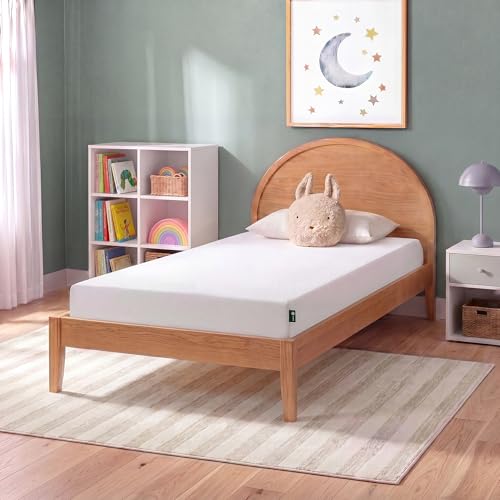
Planning a bedroom layout or outfitting a guest room starts with verifying the exact surface area needed for a secure foundation and comfortable rest. While standard sizing remains consistent across modern furniture lines, understanding what is the dimensions of a twin bed mattress helps prevent mismatched frame rails, unstable slat overhangs, and crowded walkways. A standard twin mattress measures approximately 38 inches wide by 75 inches long, making it a functional choice for children, teens, and compact living areas. Knowing these exact measurements allows buyers to evaluate interior platform pockets and guardrail clearances accurately before purchasing.
Selecting the right sleep surface involves more than just length and width, as vertical mattress depth directly impacts bed frame utility and safety. Low-profile designs measuring 5 inches, such as youth memory foam models, work exceptionally well in trundles and top bunks where rail height is critical. Meanwhile, fuller 8-inch options provide greater core foam support for everyday adult use while resting securely on slatted decks without requiring a bulky box spring. Balancing these dimensions against proper slat spacing and sturdy frame construction keeps sleep systems comfortable, aligned, and durable over time.
| Award | Product | FCH Score About FCH ScoreThe FCH Score is our own rating from 0 to 10, based on performance, design and build, ease of use, and value. It reflects independent research and is never influenced by manufacturers, retailers, or affiliate commissions. Learn more › | |
|---|---|---|---|
| Best Overall |
Zinus 5 Inch Twin Green Tea Memory Foam Mattress
|
8.3/10 | Buy |
| Best Budget |
 EGOHOME 5 Inch Twin Mattress for Kids
|
8.1/10 | Buy |
| Best Value |
 FDW | 8 Inch Twin Mattress | Medium Firm
|
8.0/10 | Buy |
| Best Premium |
EGOHOME Twin Mattress 8 Inch
|
8.0/10 | Buy |
Comprehensive Sizing and Bed Frame Guide for Twin Mattresses
Determining the right mattress size begins with understanding standard industry dimensions and how they interact with residential bed frame engineering. A standard twin mattress measures 38 inches wide by 75 inches long, providing an efficient footprint for solo sleepers, children, and multi-functional guest rooms. While surface measurements remain fixed, variables such as mattress thickness, frame pocket depth, and slat foundation mechanics significantly influence sleeping comfort and structural longevity. Matching these foundational specifications to your room layout ensures a supportive, squeak-free setup that protects your mattress investment.
Standard Twin Mattress Measurements and Perimeter Pocket Tolerances
Standard twin dimensions of 38 inches wide by 75 inches long translate to roughly 96.5 centimeters by 190.5 centimeters in metric sizing. These proportions provide approximately 2,850 square inches of usable sleep surface, accommodating children, teenagers, and average-height solo adults. Bedding manufacturers adhere strictly to these dimensions, ensuring fitted sheets and mattress protectors fit reliably across brands. Platform bed frame manufacturers intentionally engineer deck areas with slightly larger interior clearances to fit these bedding layers easily.
Most platform bed frames feature an internal mattress pocket measuring approximately 39 inches wide by 76 inches long. This extra half-inch of clearance on each side lets sleepers tuck in sheets without binding against side rails. Without this margin, making the bed becomes difficult, and constant friction against outer rails can abrade fabric covers. Conversely, an oversized pocket exceeding two inches of play can allow the mattress to shift laterally during normal sleep movement.
To prevent shifting, many platform frames include a recessed perimeter lip ranging from one-half inch to two inches deep. This shallow border cradles the bottom mattress edge, holding it securely over the foundation slats. For flush platform designs lacking a lip, manufacturers often provide non-slip silicone strips or friction pads along the slats to arrest movement. Keeping your mattress seated firmly inside this boundary prevents edge sagging and maintains consistent spinal alignment.
Twin vs. Twin XL: Length Distinctions and Frame Compatibility
Shoppers frequently confuse standard twin mattresses with Twin XL options, but their five-inch length difference prevents cross-compatibility on standard frames. While both sizes share an identical 38-inch width, a standard twin measures 75 inches long, whereas a Twin XL reaches 80 inches. Twin XL mattresses serve as the standard profile in college dormitories because they accommodate taller teens and adults over six feet tall. Installing a standard twin mattress on a Twin XL frame leaves an awkward five-inch gap, exposing bare foundation slats at the foot.
Placing a Twin XL mattress onto a standard twin platform frame creates serious structural problems. Because the frame rails stop at 75 inches, the mattress core overhangs the foot rail by five inches without underlying slat support. Overhanging foam layers or coils experience rapid structural fatigue, causing localized sagging, edge damage, and voided manufacturer warranties. Fitted sheets also fail to interchange between these two lengths, making accurate pre-purchase measurements essential.
When outfitting bedrooms for growing adolescents, checking whether your floor plan accommodates the extra five inches of a Twin XL frame is a smart step. If room dimensions permit, selecting a convertible frame that adjusts between 75 and 80 inches provides long-term flexibility. However, for compact children’s bedrooms, daybeds, and standard bunk setups, the standard 75-inch twin remains the practical choice for spatial efficiency.
Profile Height Variations: 5-Inch vs. 8-Inch Mattress Depths
While the footprint of a twin mattress remains fixed at 38 by 75 inches, vertical profile depths vary widely from slim 5-inch models to thicker 8-inch designs. A 5-inch profile mattress, often built with zoned green tea memory foam, is specifically engineered for secondary beds, youth setups, and compact furniture. These low-profile designs maintain a firmer feel because their compressed foam layers transfer sleeper weight directly to the platform base. This slim build offers minimal bulk while providing targeted pressure relief for lighter individuals.
An 8-inch twin mattress introduces a more substantial layering system, frequently pairing a two-inch gel memory foam comfort layer with a six-inch high-density base core. This dual-layer structure delivers enhanced spinal support and pressure point relief for adult sleepers and older teens. The deeper base foam prevents heavier contact points at the shoulders and hips from bottoming out against rigid slats. The added foam volume also improves thermal regulation, helping sleepers rest cooler through the night.
Profile thickness directly dictates the overall sitting height of the bed when paired with your platform frame. Standard platform frames feature deck heights between 10 and 14 inches, which combine with an 8-inch mattress to create a 18-to-22-inch sitting height. This finished height matches standard chair seating, allowing users to sit down and stand up without knee strain. Using a 5-inch mattress on a low 10-inch frame creates a low 15-inch sitting profile, which suits toddlers but can feel awkward for adults.
Slat Spacing and Foundation Mechanics for Memory Foam Support
Modern all-foam mattresses require flat, rigid, and continuous foundation support to preserve their structural integrity. Slatted platform frames represent the most common foundation style, but the gap spacing between individual slats is crucial. For memory foam cores, slat gaps should measure less than three inches apart to prevent flexible foam from sinking downward under load. Gaps wider than three inches cause localized mattress sagging, compromising spinal alignment and voiding standard mattress warranty guidelines.
Platform bed frames eliminate the need for traditional box springs, reducing furniture expenses and creating a sleek bedroom profile. Because foam mattresses require rigid support planes rather than flexible spring recoil, placing them on traditional box springs causes uneven support and instability. Well-engineered platform beds utilize solid wood slats, curved birch slats, or coated steel grids that distribute sleeper weight evenly while allowing airflow through the bottom fabric cover.
If your existing bed frame features wide slat spacing exceeding three inches, adding a low-profile bunkie board provides an easy corrective measure. A bunkie board measures one to two inches thick and establishes a uniform, flat deck across wide slats without substantially raising bed height. This solid platform prevents foam extrusion between slats, eliminates center dips, and maintains the contouring benefits of high-density memory foam layers.
Frame Load Capacities, Center Rails, and Sleeper Support
Calculating structural load demands requires adding the tare weight of the mattress to the dynamic weight of the sleeper. While an 8-inch twin foam mattress weighs between 25 and 40 pounds, active sleeper movement imparts concentrated dynamic forces to perimeter rails and corner joints. Standard residential twin frames typically offer static load ratings from 250 to 500 pounds, accommodating children and average adults easily. Heavy-duty steel or solid hardwood frames can support up to 800 pounds, providing dependable durability for adult guest rooms.
Although twin frames are narrower than full or queen foundations, center support rails remain vital for overall platform rigidity. Wider twin designs and elevated models often incorporate a longitudinal center beam or mid-span crossmember to resist rail deflection. When center support legs are present, verifying that they feature adjustable leveling glides ensures firm contact with the floor. Floating center legs allow the platform deck to flex under motion, leading to fastener loosening and premature frame wear.
Flooring materials influence center leg stability and joinery health over time. On medium-to-thick carpeting, dragging an assembled bed frame can cause vertical support legs to cant or shear away from mounting brackets. When moving a twin bed, always lift the entire structure rather than sliding it across carpeted surfaces. Placing dense felt floor pads or rubber caster cups beneath each contact point protects hardwood finishes and stabilizes the frame against shifting.
Trundle Beds, Bunk Beds, and Daybeds: Vertical Clearance Constraints
Specialized furniture such as bunk beds, daybeds, and roll-out trundles requires strict attention to mattress profile height alongside standard 38 by 75-inch dimensions. Trundle drawers rolling beneath a primary daybed typically offer between six and eight inches of vertical clearance below the upper rail. Placing an 8-inch mattress on a shallow trundle deck causes bedding to drag or catch against the underside of the main frame. For these compact roll-out foundations, a 5-inch profile mattress provides smooth, unhindered operation.
Safety standards for bunk beds and loft beds mandate specific mattress thickness limits to prevent accidental falls. Residential safety rules require that the top of upper bunk guardrails must extend at least five inches above the uncompressed mattress surface. Placing a thick 10-inch mattress on an upper bunk compromises this safety barrier substantially. Opting for a 5-inch or 6-inch low-profile twin mattress maintains compliant guardrail height, protecting young sleepers throughout the night.
Daybeds introduce distinctive framing requirements because they feature enclosed side and back panels wrapping around three sides of the mattress. Because daybeds function as daytime seating and nighttime sleeping surfaces, the mattress must fit neatly within this three-sided perimeter without wide edge gaps. A standard 38 by 75-inch twin mattress nests into standard daybed frames comfortably, allowing decorative cushions and bolsters to sit firmly against the upright frame back.
Bedroom Spatial Planning, Walkway Clearances, and Storage Integration
Fitting a twin bed into a bedroom requires thoughtful spatial planning to preserve comfortable room flow and open pathways. The exterior footprint of a bed frame always exceeds the 38 by 75-inch mattress dimensions, measuring 40 to 44 inches wide and 78 to 82 inches long once headboards and posts are included. Interior design guidelines recommend keeping at least 30 to 36 inches of clear floor space along open sides of the bed for comfortable walking, cleaning, and bed-making.
In compact secondary bedrooms or shared children’s rooms measuring eight by ten feet, placing a twin bed against a corner wall saves valuable floor area. However, placing one side against a wall restricts bed access and makes tucking in sheets more challenging. Elevated platform beds with 12 to 14 inches of under-bed clearance offer useful vertical space for storage containers, boosting storage utility in rooms with limited closet space.
If your platform frame includes integrated rolling drawers on castors, calculate extra floor clearance beyond the outer frame edge. Standard under-bed drawers require 20 to 24 inches of open floor space to pull out fully. Placing a bedside table, desk, or heavy rug directly beside the bed can block drawer extension, obstructing access to stored belongings. Checking these furniture pathways before placing your frame ensures smooth daily function without cramped room bottlenecks.
Hardware Assembly Integrity, Acoustic Isolation, and Joinery Maintenance
Long-term structural stability and noise-free sleep depend on the quality of connection hardware used during bed frame assembly. Inexpensive platform frames often rely on direct wood screws driven into particleboard or engineered MDF, which can strip easily during assembly or relocation. Higher-quality frame designs employ steel machine bolts paired with threaded metal barrel nuts or welded corner brackets, creating rigid joints that endure repeated dynamic movement without wobbling over time.
Persistent frame squeaks typically originate from metal-on-metal or wood-on-wood friction at loose joinery connections and slat contact points. Applying high-density EVA foam dampening tape along interior side rail ledges and center support beams cushions the slats, eliminating friction creaks when sleepers move. Additionally, inserting nylon washers between metal bracket bolts isolates mechanical vibration, resulting in an acoustically quiet foundation that promotes undisturbed rest.
Regular hardware maintenance preserves frame squareness and prevents joint fatigue over years of daily residential use. As solid wood components expand and contract with seasonal humidity shifts, fastener tension can loosen slightly, causing joint play and frame noise. Inspecting and re-torquing all corner bolts, leg fasteners, and leveling glides thirty days after assembly, and twice yearly thereafter, keeps your platform rigid, square, and fully supportive for the life of your mattress.
About the author
Nashia Baker is a home and lifestyle journalist who covers furniture, décor, and everyday living. Her work includes hands-on seating reviews and product comparisons, with particular attention to comfort, materials, and how furniture fits into real homes.