
How Wide Is a Full Sized Bed? Dimensions, Frame Fit, and Room Guide
Wondering how wide is a full sized bed? Learn standard mattress dimensions, frame clearances, and smart bedroom layout tips updated for October 2026.
 By Kate McGregor
Updated October 9, 2026
By Kate McGregor
Updated October 9, 2026

Planning a bedroom layout requires knowing your mattress and frame dimensions before bringing furniture through the door. A common point of confusion for shoppers is exactly how wide is a full sized bed and whether the exterior frame takes up significantly more floor area than the mattress itself. Standard full mattresses deliver fifty-four inches of sleeping width, creating a balanced middle ground between cramped twin frames and sprawling queen beds. Understanding these core measurements helps prevent overcrowded walkways, blocked closet doors, and tight nightstand arrangements in compact rooms.
Exterior bed frames often add several extra inches beyond the bare mattress footprint, depending on the presence of side rails, storage drawers, or bookcase headboards. Modern platform options can also eliminate the traditional box spring, utilizing closely spaced metal or wooden slats to maintain proper spinal support and meet mattress warranty standards. Pairing the right foundation with your room dimensions ensures comfortable movement around the bed while optimizing available floor space. Exploring frame styles, clearance requirements, and structural designs makes it easier to select a setup that fits your bedroom layout seamlessly.
| Award | Product | FCH Score About FCH ScoreThe FCH Score is our own rating from 0 to 10, based on performance, design and build, ease of use, and value. It reflects independent research and is never influenced by manufacturers, retailers, or affiliate commissions. Learn more › | |
|---|---|---|---|
| Best Overall |
Yicensen 14 Inch Full XL Bed Frame No Box Spring
|
9.2/10 | Buy |
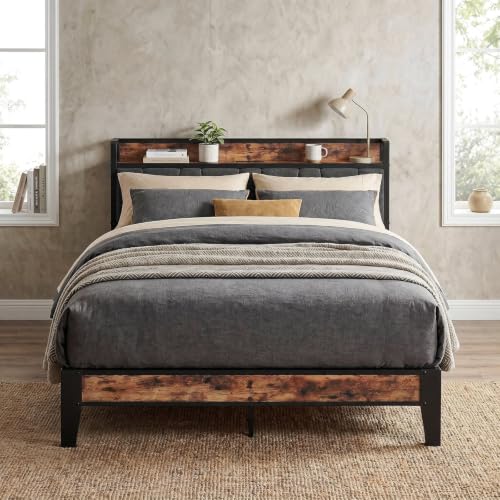 LIKIMIO Full XL Bed Frame with Storage Headboard
|
8.9/10 | Buy | |
 Pipishell Full Adjustable Bed Frame with
|
9.2/10 | Buy | |
| Best Budget |
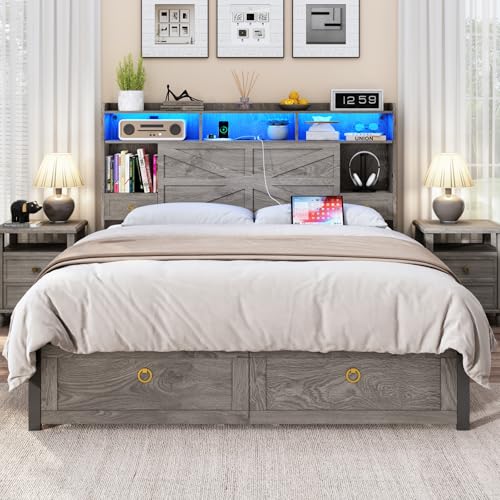 TIGUBFRE Full Bed Frame with Storage Headboard
|
9.1/10 | Buy |
| Best Value |
 DICTAC Full Corner Bed Frame with Bookcase Storage
|
9.1/10 | Buy |
| Best Premium |
 VINGLI Full Bed Frame with 4 Storage Drawers
|
9.2/10 | Buy |
Understanding Full Bed Dimensions, Frame Widths, and Bedroom Planning
Setting up a bedroom requires clear spatial calculations, especially when managing tight floor plans or multi-use guest spaces. While a standard full mattress measures fifty-four inches in width, exterior platform bed frames and daybeds often require extra clearance for perimeter ledges, corner posts, and storage drawers. Examining these spatial dynamics helps you determine whether a traditional full or an extended full XL profile best aligns with your sleeping habits and room layout. The following sections outline the essential physical dimensions, clearance considerations, and mechanical frame features that define full bed setups.
Standard Full Mattress Dimensions and the 54-Inch Standard
In the United States, a standard full mattress, traditionally called a double bed, measures fifty-four inches wide by seventy-five inches long. This standard width provides four and a half feet of horizontal sleeping space, which was historically designed to accommodate two adults in earlier eras of compact home architecture. Today, this width is widely considered optimal for single sleepers who have outgrown a thirty-eight-inch twin bed but lack the floor space for a sixty-inch queen. Knowing that the mattress core is strictly fifty-four inches gives you a consistent baseline when evaluating bed frame specifications.
Mattress manufacturers adhere closely to these dimensional tolerances, typically maintaining variation within a half-inch of the official standard. This consistency ensures that fitted sheets, mattress protectors, and drop-in mattress pads align properly across different brands. However, pillow-top constructions and deep hybrid builds can slightly bulge along the sidewalls, adding minor perimeter width once compressed under body weight. Factoring in this slight outward contour prevents tight frame pockets from pinching bedding materials or restricting sheet tucking along the perimeter rails.
Full vs. Full XL: When Extra Length Matters
While standard full beds measure seventy-five inches in length, the less common full XL format extends the sleeping surface to eighty inches while keeping the width at fifty-four inches. This five-inch extension matches the length of standard queen and king mattresses, making it especially beneficial for taller teenagers, college students, and single adults over six feet tall. Frames like the Yicensen 14 Inch Full XL Bed Frame No Box Spring and the LIKIMIO Full XL Bed Frame with Storage Headboard are engineered specifically for this extended footprint. Because the width remains fifty-four inches, the bed retains its slim horizontal profile while eliminating foot overhang.
Selecting a full XL frame requires careful attention to bedding availability and overall room length. Standard full sheets and comforters will not fit an eighty-inch mattress, requiring specialized full XL linens or slightly oversized queen blankets. Also, that extra five inches of frame length extends further into the bedroom walking pathway, which can alter the placement of area rugs and opposing dressers. Verifying whether you need standard full or full XL length early in the planning process prevents mismatches between your frame and mattress.
Exterior Frame Width vs. Mattress Pocket Dimensions
A primary misconception among buyers is assuming the bed frame shares the exact fifty-four-inch width of the mattress. In reality, exterior frame dimensions almost always measure wider than the internal mattress pocket to accommodate structural side rails, corner brackets, and aesthetic trim. Minimalist steel platform frames typically measure fifty-five to fifty-six inches wide, adding just an inch or two of total perimeter bulk. In contrast, upholstered beds with thick padding, winged headboard accents, or integrated side shelving can easily stretch the total width to fifty-eight inches or more.
The internal mattress pocket must provide a fraction of an inch of clearance so the mattress drops in smoothly without binding against the side rails. High-profile platform models often include raised perimeter lips or corner slide stoppers to prevent mattress migration during sleep movement. For instance, the DICTAC Full Corner Bed Frame with Bookcase Storage incorporates dedicated mattress slide stoppers and corner protectors that hold the mattress firmly within its designated boundary. Measuring your available wall space against the frame exterior width rather than the mattress width ensures your furniture fits comfortably.
Calculating Bedroom Clearances and Walking Pathways
Proper bedroom planning requires balancing furniture footprints against necessary walking pathways and door swing arcs. Interior design standards generally recommend maintaining at least thirty inches of clear walkway space around the perimeter of the bed for comfortable movement. In compact guest rooms or studio apartments, this clearance can occasionally drop to twenty-four inches, though tighter spaces can make daily bed-making and vacuuming awkward. Placing a fifty-four-inch mattress on a fifty-six-inch frame into a ten-foot by ten-foot room leaves roughly thirty-two inches of buffer on each side when centered along a primary wall.
Window locations, closet bifold doors, and heating vents also dictate where a full bed can sit comfortably. Placing a bed too close to a swing-door closet can restrict door travel or force you to navigate narrow gaps each morning. You should also verify that standard nightstands, typically measuring eighteen to twenty-four inches wide, have adequate clearance beside the frame without blocking electrical outlets or baseboard heaters. Mapping your room perimeter with painters tape before purchasing allows you to visualize the exact footprint in real space.
Single Sleepers vs. Couples: Sleeping Space Ergonomics
Evaluating whether a full bed suits your needs depends heavily on who will occupy the mattress on a nightly basis. For solo sleepers, fifty-four inches offers plenty of lateral freedom, allowing natural shifting and rolling without feeling constrained by the mattress edges. Children, teenagers, and single adults will find a full bed offers a noticeably more spacious sleeping experience than a twin. It also serves as an efficient guest room solution that accommodates individual visitors of any age without dominating the room.
For couples sharing a bed regularly, a fifty-four-inch mattress allocates just twenty-seven inches of width per person, which is identical to the width of a standard crib. While suitable for temporary guest stays or cozy sleeping preferences, this narrow allocation can restrict movement and increase motion transfer between partners. Couples who sleep hot or shift frequently throughout the night often find a sixty-inch queen bed far more restorative over the long term. Understanding these spatial realities helps you determine whether a full bed matches your lifestyle or if a larger foundation is necessary.
Platform Bed Foundation Mechanics and Slat Support
Modern full bed frames have largely replaced bulky box springs with direct platform slat systems that support the mattress evenly. Platform designs rely on closely spaced wooden or steel slats that distribute body weight across the entire foundation perimeter. Mattress manufacturers often mandate slat gaps of less than three inches to maintain warranty coverage on modern memory foam and hybrid mattresses. Wider gaps can allow dense foam layers to sag downward between the slats, resulting in uneven body support and premature structural degradation of the mattress core.
The structural integrity of a platform bed also depends on its center support rail and dedicated leveling legs. Heavy-duty designs, such as the Yicensen 14 Inch Full XL Bed Frame No Box Spring, utilize robust metal slats and solid longitudinal beams to support static loads up to several thousand pounds without deformation. By supporting the mattress directly on reinforced slats, these frames eliminate the extra height and expense of a secondary box spring foundation. This direct deck profile also keeps the overall bed height at an ergonomic level for sitting and standing comfortably.
Noise Prevention and Structural Joint Rigidity
Nocturnal squeaking and frame creaks are common complaints among sleepers who purchase poorly engineered flat-pack furniture. These noises typically arise from metal-on-metal friction at corner bracket connections or wood-on-metal rubbing along the slat resting ledges. Quality bed frames incorporate dampening materials, such as ethylene-vinyl acetate (EVA) foam mute strips, to cushion the interface between support slats and the central rail. Both the VINGLI Full Bed Frame with 4 Storage Drawers and the TIGUBFRE Full Bed Frame with Storage Headboard utilize silent EVA pads specifically to isolate friction noise during nighttime movement.
Fastener construction also plays a decisive role in long-term acoustic isolation and frame stability. Frames assembled with machine bolts threading into welded steel inserts or steel barrel nuts maintain tension far better than frames using direct wood screws. Over time, wood screws can strip their pilot holes under lateral movement, causing loose joints and rhythmic squeaks. Inspecting and retightening frame hardware after the initial month of use settles the joinery and helps preserve silent, stable performance over years of ownership.
Drawer Clearances in Small Bedroom Footprints
Storage bed frames maximize compact floor plans by converting empty under-bed voids into practical storage zones. Models such as the VINGLI Full Bed Frame with 4 Storage Drawers feature four caster-mounted drawers that roll out from the sides, offering ample space for bedding and seasonal clothing. However, integrating side drawers introduces additional clearance requirements that must be accounted for during room layout planning. Each drawer typically extends eighteen to twenty-four inches outward, requiring unobstructed floor space along the sides of the bed frame.
Placing bedside nightstands directly adjacent to a storage bed can inadvertently block the head-side drawers from rolling open fully. To overcome this obstacle, some designs, like the TIGUBFRE Full Bed Frame with Storage Headboard, place large storage drawers at the foot of the bed while offering shelf cubbies in the headboard. In addition, thick high-pile area rugs can impede small caster wheels from gliding smoothly across the floor surface. Ensuring smooth floor paths or low-pile rugs around the bed perimeter preserves easy access to under-bed compartments.
Motorized Bases and Corner Daybed Configurations
Beyond traditional platform frames, specialty full beds offer enhanced functional versatility for reading, working, and relaxation. Motorized foundations, such as the Pipishell Full Adjustable Bed Frame with, allow sleepers to elevate their head up to sixty-five degrees and their feet up to forty-five degrees for customized ergonomic support. These electric bases include independent articulating mechanisms that must clear wall surfaces and headboards throughout their range of motion. Adjustable base designs often feature customizable leg height segments, allowing you to select between lower deck profiles and elevated clearances for under-bed storage.
Corner daybeds represent another practical evolution for multi-functional spaces, home offices, and teen bedrooms. The DICTAC Full Corner Bed Frame with Bookcase Storage utilizes an L-shaped semi-enclosed guardrail that functions as a comfortable daytime sofa against bedroom walls before serving as a full sleeping surface at night. Because its guardrail can be installed on either the left or right side, it adapts directly to varied room corners. Integrated technology, including USB charging ports, AC power outlets, and ambient LED light strips, further streamlines modern bedroom setups by eliminating redundant end tables.
Long-Term Frame Maintenance and Center Support Alignment
Maintaining the stability of a full bed frame requires routine inspection of the central support infrastructure. Because the fifty-four-inch width spans a substantial horizontal gap, center legs carry a significant share of the sleeper and mattress load. When a bed frame is dragged across carpeting during room rearrangement, these central support legs can easily tilt, bend, or strip their mounting threads. Lifting the bed entirely when shifting its position preserves vertical alignment and prevents leg failure under load.
Floor leveling adjustments are equally vital for preventing lateral sway and uneven weight distribution across the frame. Many modern bed designs incorporate threaded leveling glides on center legs, allowing you to compensate for slight dips in older wood or uneven subfloors. Ensuring that every center foot maintains firm, pressurized contact with the floor prevents the middle beam from bowing downward when weight is applied. Periodic visual checks of these leveling feet guarantee that your platform provides flat, rigid support for the mattress above.
Practical Takeaways for Choosing the Right Full Bed Frame
Selecting the ideal full bed setup involves balancing the fifty-four-inch mattress standard against exterior frame profiles, storage features, and room dimensions. A simple steel platform frame preserves maximum floor space and offers straightforward assembly for minimalists and budget-conscious apartment renters. Conversely, storage beds with rolling drawers or bookcase headboards consolidate multiple pieces of bedroom furniture into a single functional footprint. Factoring in exterior width extensions, walking clearances, and door swing arcs ensures your chosen frame complements your room rather than crowding it.
Prioritizing durable construction elements, such as heavy-duty metal slats, noise-dampening EVA foam strips, and solid center support rails, guarantees reliable performance for years to come. Whether you opt for a standard full mattress or an extended full XL frame for extra legroom, measuring your physical space beforehand remains the most critical step. With the right foundation in place, a full sized bed delivers a comfortable, supportive sleep sanctuary while optimizing every square foot of your living space.
About the author
Kate McGregor is a design and shopping editor with experience covering furniture, home décor, and interior trends. From sleeper sofas to dining chairs and storage solutions, her editorial work explores the details that make furnishings both attractive and practical.