
What Is Measurement of a Queen Size Bed: Dimensions and Layout Guide for 2026
Find what is measurement of a queen size bed in October 2026, including standard frame footprints, clearance rules, and bedroom layout advice.
 By Noah Kaufman
Updated October 9, 2026
By Noah Kaufman
Updated October 9, 2026
Planning a bedroom layout requires knowing exact mattress boundaries and structural frame footprints before moving heavy furniture into place. When buyers ask what is measurement of a queen size bed, the immediate answer for a standard mattress is 60 inches wide by 80 inches long. That rectangular footprint provides 4,800 square inches of surface area, giving solo sleepers expansive comfort and couples adequate personal width. However, real-world bedroom planning involves more than mattress dimensions alone because bed frame construction, headboards, and clearance perimeters expand the actual footprint inside a room.
A supportive foundation balances mattress weight, sleeper load, and under-bed storage access without overcrowding your walkway. Choosing between a streamlined platform deck and a substantial upholstered surround determines whether your bed occupies exactly 60 by 80 inches or several inches more in both directions. Understanding standard tolerances ensures your sheets fit snugly, your bed skirts hang cleanly, and your bedroom allows at least two to three feet of open walking clearance around the perimeter.
| Award | Product | FCH Score About FCH ScoreThe FCH Score is our own rating from 0 to 10, based on performance, design and build, ease of use, and value. It reflects independent research and is never influenced by manufacturers, retailers, or affiliate commissions. Learn more › | |
|---|---|---|---|
| Best Overall |
Linen Market Bed Skirt - Ultra Soft Microfiber
|
9.2/10 | Buy |
 Linen Market Bed Skirt - Ultra Soft Microfiber
|
8.6/10 | Buy | |
| Best Premium |
 Maenizi 20 Inch Queen Bed Frame No Box Spring
|
8.3/10 | Buy |
| Best Value |
 Mellanni Bed Skirt Queen Size
|
8.8/10 | Buy |
| Best Budget |
 Mosquito Net Bed Canopy for Girls,King Canopy Bed
|
8.8/10 | Buy |
 Linen Market Bed Skirt - Ultra Soft Microfiber
|
8.0/10 | Buy |
Dimensions, Frame Tolerances, and Spatial Planning for Queen Beds
Navigating bedroom furniture purchases begins with knowing exact mattress dimensions and how those numbers translate into your physical living space. While a queen mattress follows uniform manufacturing standards across North America, the supportive bed frame, headboard, and surrounding furniture expand the overall footprint. Evaluating these measurements ahead of time prevents crowded walkways, misaligned bedding, and costly return hassles.
Standard Queen Mattress Dimensions and Surface Area
A standard queen size mattress measures exactly 60 inches wide by 80 inches long, which equals 5 feet in width and 6 feet 8 inches in length. In metric dimensions, this translates to approximately 152 centimeters wide by 203 centimeters long. This size provides a total sleeping surface of 4,800 square inches, making it a balanced choice for master bedrooms and guest rooms.
Comparing the queen mattress to other standard sizes highlights why it remains such a versatile sleeping foundation. A standard full mattress measures 54 inches wide by 75 inches long, offering six inches less width and five inches less legroom than a queen. That additional five inches of length is critical for taller sleepers, preventing feet from hanging off the bottom edge. Meanwhile, a standard king mattress expands to 76 inches wide by 80 inches long, requiring a substantially wider bedroom layout.
Manufacturing tolerances in the bedding industry generally allow for slight dimensional variance. Most foam, hybrid, and innerspring mattresses measure within one half inch to one inch of the nominal 60 by 80 inch standard. Soft-sided memory foam cores may measure slightly smaller before fully expanding, while thick pillow-top builds can crown along the perimeter borders. These small variations rarely interfere with standard fitted sheets, but they remain helpful to keep in mind when fitting mattresses into rigid bed frame pockets.
Platform Bed Frame Dimensions vs. Mattress Pocket Sizing
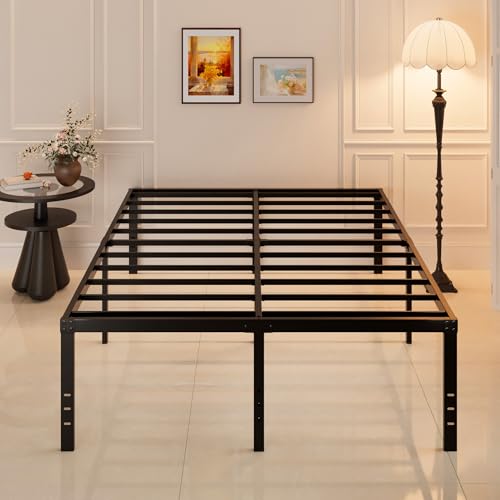
A bed frame almost always occupies a larger footprint than the mattress sitting on top of it. Basic steel platform foundations are designed to stay as close to mattress boundaries as possible to conserve floor area. For example, the Maenizi 20-inch heavy-duty metal queen bed frame lists exterior dimensions of 79.6 inches long by 59.6 inches wide. This compact design allows the frame to sit nearly flush beneath a standard queen mattress without protruding into tight walkways.
Upholstered bed frames, wooden panel beds, and storage beds with drawers expand external measurements considerably. Padded side rails and tufted headboards often add two to six inches of width, pushing the total frame width to 64 or 66 inches. Sleigh beds or frames with thick, curved footboards can add six to twelve inches of length, requiring up to 92 inches of total room depth. Measuring the overall frame profile rather than relying solely on mattress dimensions prevents clearance issues during furniture placement.
Mattress pocket depth also plays a functional role in how the bed performs over time. Some platform frames feature a recessed deck with a lip that cradles the bottom one to two inches of the mattress core. This perimeter lip keeps memory foam and hybrid mattresses from shifting sideways during sleep movement. Flush platform frames without recessed lips rely on non-slip friction pads or textured mattress covers to maintain alignment.
Vertical Profile, Deck Height, and Sitting Ergonomics
Vertical clearance and overall bed height significantly impact daily comfort and bedroom accessibility. Standard sitting ergonomics suggest that the top of your mattress should align roughly with the crease of your knees, typically between 18 and 25 inches from the floor. This seated height allows you to sit down and stand up without excessive strain on your knees or hips. Achieving this ergonomic balance requires calculating the combined height of your platform deck and mattress thickness.
Platform bed frames vary dramatically in deck profile, ranging from low-slung designs to tall, utility-focused foundations. High-profile designs, such as the 20-inch high Maenizi platform base, position the support deck twenty inches off the floor. Pairing a 20-inch tall platform frame with a modern 12-inch hybrid mattress creates an overall sleeping surface height of 32 inches. That elevation provides an elevated sleeping surface while opening up generous vertical room underneath the frame for storage containers.
In contrast, traditional low-profile platform frames sit between 6 and 10 inches off the ground. These lower frames work well in bedrooms with low ceilings, sloped attic walls, or minimalist modern decor themes. However, low decks offer minimal under-bed clearance and require deeper bending when getting into bed. Matching your frame deck height to your mattress profile ensures the completed sleeping setup matches your personal physical comfort.
Bed Skirt Drop Lengths and Under-Bed Storage Concealment
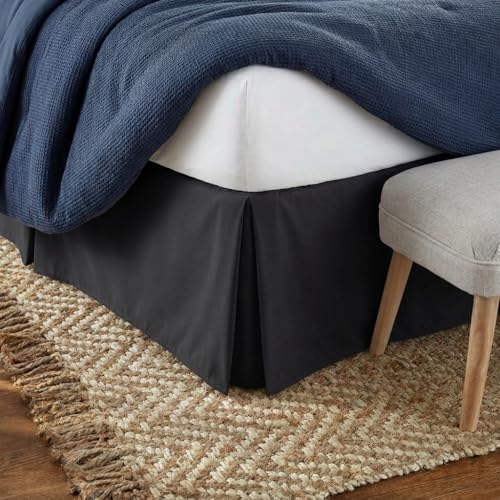
Bed skirts provide a clean, tailored appearance by concealing steel frame legs, box springs, and stored containers beneath the deck. A standard queen size bed skirt features a platform fabric deck measuring 60 inches wide by 80 inches long to match mattress boundaries. The critical measurement to confirm before purchasing is the drop length, which represents the vertical fabric distance from the deck seam down to the floor. Choosing the incorrect drop leaves fabric pooling on the carpet or leaves support legs visibly exposed.
Common drop lengths for residential bedding range between 14 and 15 inches. For instance, the Linen Market microfiber queen bed skirt provides a 14-inch tailored drop with quadruple pleating along the corners and sides. Similarly, the Mellanni queen bed skirt offers a 15-inch tailored drop designed to cover standard box spring and frame assemblies. If you utilize an extra-tall platform frame like a 20-inch metal base, standard 14-inch skirts will stop short of the floor, leaving lower storage bins visible.
Accurately determining your required drop length takes only a minute with a standard tape measure. Place the end of the measuring tape on the top edge of your box spring or slatted platform deck, right where the mattress rests. Measure vertically down to the floor surface, accounting for plush carpet pile or area rugs. Selecting a bed skirt that matches this measurement ensures a crisp, tailored drape that touches the floor without gathering excess dust.
Minimum Room Dimensions and Walkway Clearance
Installing a queen bed requires careful spatial evaluation to keep the bedroom functional and pleasant. The absolute minimum bedroom size for a 60 by 80 inch queen bed is 10 feet by 10 feet, which equals 100 square feet of floor space. In a 10 by 10 foot room, a queen bed consumes nearly one-third of the total available area. While this setup fits the mattress and slim nightstands, it leaves limited floor area for secondary furniture like large dressers or armoires.
A bedroom measuring 10 feet by 12 feet or 12 feet by 12 feet offers a much more balanced living environment for a queen setup. These dimensions provide ample perimeter space to establish comfortable walking paths around three sides of the bed. Interior layout guidelines generally recommend maintaining at least 30 to 36 inches of clear walkway space between the edge of the mattress and adjacent walls or furniture. That clearance allows occupants to move freely and access closet doors without squeezing through tight gaps.
Bedside storage access must also factor into your clearance calculations. Standard nightstands measure between 18 and 24 inches wide, requiring at least two feet of wall space on either side of the headboard. Furthermore, bedroom dressers with pull-out drawers require 36 to 42 inches of open floor space in front of them for unhindered operation. Mapping out these zones before assembling your frame prevents functional bottlenecks in daily routines.
Structural Support Mechanics and Center Rail Engineering
A queen bed spans five full feet across, creating a wide unsupported center gap that requires dedicated reinforcement. Unlike twin or full beds that can occasionally rely on side-rail ledges alone, queen frames mandate a heavy-duty longitudinal center support rail. Without this central spine, the combined weight of two sleepers and a dense mattress causes horizontal slats to bow downward over time. That center sagging damages mattress internal support layers and causes restless sleep as bodies roll toward the middle.
Multi-leg load distribution provides the foundational rigidity necessary for long-term durability. Frames such as the Maenizi queen platform bed incorporate a 9-leg support layout to evenly distribute static and dynamic weight across the floor. This arrangement places support legs at the four perimeter corners, along the side rails, and directly down the center spine. Dividing total bed weight across nine distinct contact points reduces localized floor stress and resists frame racking during movement.
Adjustable leveling feet attached to center support legs are essential for proper stability on uneven floors. If center legs hang slightly above the flooring, the center rail flexes downward each time sleepers lie on the bed, producing creaking noises and joint fatigue. Conversely, adjusting center glides to make firm contact prevents legs from bending or buckling when shifting position. Re-checking leveling glides after initial mattress placement ensures that weight distributes evenly across all support points.
Overhead Clearance, Headboards, and Decorative Canopies
Vertical clearance extends beyond mattress deck height to include headboards, footboards, and overhead ceiling accents. Many metal platform bases, including the Maenizi queen frame, feature pre-drilled leg brackets with reserved holes to attach standalone headboards or footboards. Adding a headboard typically increases bed depth by two to four inches and extends vertical wall presence up to 48 or 54 inches. Verifying that your headboard clears low window sills and wall electrical outlets prevents awkward installation conflicts.
Ceiling height is equally critical when installing decorative accents like hanging bed canopies or four-poster frames. Dome mosquito net canopies, such as the Comtelek dome canopy, feature a 24-inch hoop diameter, a 98.5-inch total height, and a 500-inch base circumference. Draping a canopy of this size around a 60 by 80 inch queen bed requires a ceiling height of at least eight to nine feet for an elegant sweep. An adjustable hanging tether allows sleepers to calibrate dome suspension so netting drapes neatly around bed corners without bunching on the floor.
Wall anchoring and frame stability also deserve attention when assembling tall decorative components. Freestanding headboards that are bolted directly to metal platform legs can occasionally vibrate against bedroom drywall during sleep movement. Placing dense felt pads or adhesive rubber bumpers along the rear posts of the headboard dampens noise and prevents scuffing on painted surfaces. Verifying all bracket bolts remain tightly fastened keeps the entire assembly rigid and silent.
Comparing Queen Dimensions to California King Foundations
Bedding terminology often leads to confusion between standard queen beds and California king foundations. While a queen mattress measures 60 inches wide by 80 inches long, a California king mattress expands to 72 inches wide by 84 inches long. This difference is clearly reflected in specialized bedding dimensions, such as California king bed skirts that require 72 by 84 inches of deck coverage with a 14-inch drop. Purchasing queen accessories for a California king bed results in an obvious twelve-inch deficit in width and a four-inch shortage in length.
Deciding between a queen setup and a California king foundation comes down to sleeper height and room proportions. Sleepers who measure over six feet two inches often appreciate the four additional inches of length that an 84-inch California king mattress provides. However, accommodating that extra length and the 72-inch width requires a bedroom measuring at least 12 feet by 14 feet to preserve walkable space. For average-height sleepers in standard 10 by 11 or 10 by 12 foot bedrooms, a 60 by 80 inch queen remains the most practical and space-conscious selection.
Linens, bed skirts, and mattress protectors are not interchangeable between queen and California king sizes. Placing a queen fitted sheet over a California king core causes immediate corner tearing and elastic failure due to the dimensional mismatch. Similarly, platform frames built for 60 by 80 inch dimensions cannot safely support wider foundations without structural rail overhang. Double-checking labeled product dimensions on bedding packaging guarantees that each layer fits your bed setup correctly.
Practical Measurement Verification and Bedroom Planning
Successfully setting up a queen bed begins with verifying all spatial dimensions before unpacking your furniture boxes. Measure the exact footprint of your proposed bed location using painter tape on the floor to outline the 60 by 80 inch mattress boundaries. Add several inches around that perimeter to account for your specific frame style, headboard thickness, and baseboard radiator offsets. Walking around the taped outline reveals whether your planned nightstands, dressers, and closet doors have adequate opening clearance.
Do not forget to measure transit pathways, including stairwells, narrow apartment hallways, and interior bedroom door frames. Modern flat-pack platform bed frames ship in compact cardboard cartons that navigate tight corners with relative ease, but standard mattresses and one-piece box springs cannot bend around sharp turns. Opting for a platform frame that eliminates the need for a rigid box spring simplifies moving logistics significantly. Once assembled, verifying that frame bolts are securely torqued and center support legs touch the floor ensures years of silent, stable support.
About the author
Noah Kaufman is a product-focused editor and writer with experience evaluating household equipment. His published furniture reviews include outdoor sofas, upholstered seating, and standing desks, often drawing on how products perform in everyday home settings.